
Michael McCutchan has spent his entire life looking out for other people. At 16, he joined his local fire department as a junior volunteer. He went on to serve as a New York Police Department detective and later as an investigator with the New York State Attorney General’s Office. Along the way, he developed a habit his family knew well: He always stopped when he saw someone stranded on the side of the road.
“It could be my sister. It could be my mother,” he says. “Basically, I did that my whole life.”
On an early October morning in 2021, that instinct nearly cost him everything.
A Split-Second Decision
McCutchan was driving on the Mario Cuomo Bridge when he spotted a car stopped in the center lane, its driver slumped over the wheel. He pulled over, helped the man safely to the side of the road, retrieved cones from his truck and began directing traffic.
“I glanced away for a second, and when I glanced back, all I saw was the white light,” he recalls.
That light was the headlight of an oncoming commercial truck. McCutchan was struck, thrown into the air and ended up pinned beneath the car of the driver he’d just rescued. Even then, with his face crushed and his body broken, he could still talk to paramedics when they arrived.
When paramedics began to cut away his safety vest, he told them not to. “It was my favorite. I said if they cut it off, they would have to buy me a new one,” he says now, laughing softly. “They were in shock. They thought I was dead.”
Where Minutes Mattered Most
McCutchan arrived at Westchester Medical Center with catastrophic injuries: a traumatic brain injury, a fractured skull, fractured facial bones, more than eight broken ribs and a leg that had been nearly severed. Doctors pumped liters of blood into him. He was placed in a medically induced coma for six weeks and underwent somewhere between 25 and 30 surgeries, including a leg amputation.
His first clear memory from those early days is an anesthesiologist asking him for his name, then for a thumbs-up. “I gave him a thumbs up. From what I understand, talking to the doctor afterward, that was the beginning.”
Westchester Medical Center is the only Level I trauma center in the Hudson Valley—the highest designation for trauma care, with specialized teams available around the clock for the most critically injured patients. McCutchan later learned that geography may have saved his life.
“If the accident happened maybe two miles further over the bridge, I would not have gone to Westchester,” he says. “I may not have made it.”
Two Paths Through Recovery
Once he moved to rehabilitation, the harder work began. McCutchan describes trauma recovery as two equal and distinct paths.
“You have the physical recovery, which includes the healing of the body and the introduction to a prosthetic,” he says. “And then you have the mental recovery. I found myself asking: What just happened to me? How am I going to continue? How am I going to support my family?”
For a man who spent 45 years doing the helping, needing help was unfamiliar territory. What got him through it, in large part, were the people he met along the way. A maintenance worker named Carlos, himself a survivor of a serious injury, made it his purpose to check in on patients in the brain injury unit. A 30-year-old double amputee named Nick, whom McCutchan worked out alongside during prosthetic training, offered a chance to discuss daily struggles.
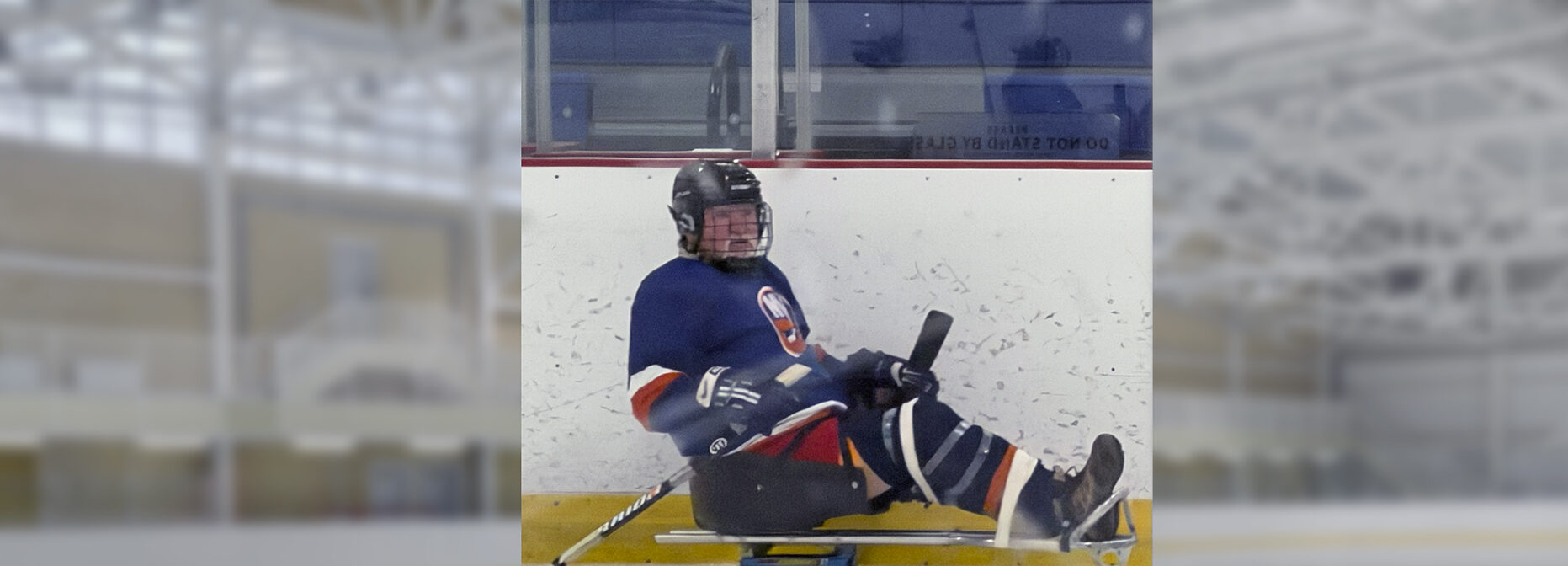
Late at night in rehab, when he couldn’t sleep, McCutchan found himself watching the Paralympics on television. The sled hockey events caught his attention. It became something to inspire him during his recovery.
Coming Back to Give Back
The connections with Carlos, Nick and others who understood what he was going through stayed with McCutchan. When he was invited back to Westchester Medical Center for a staff symposium where his case was used as a teaching example, he talked about what it means to hear from someone who has actually been through it. That conversation helped seed the hospital’s Trauma Survivors program.
Several times a year, the program hosts lunches that bring survivors and their families together with the care teams who treated them. McCutchan has watched people arrive barely able to speak and come back to the next gathering walking on their own.
“This support group has created a whole other family of people who had something happen in their life,” he says. “I live on Long Island, but I travel up to be a part of it as often as I can.”
Today, McCutchan is getting back to activities he loves, like walking and riding his bike. He coached ice hockey for 20 years and knows he won’t be able to get a skate on over his prosthetic leg, but he’s already eyeing his next goal. Those sleepless nights in rehab, watching the Paralympics on television, left an impression. Sled hockey is the next goal on the list.
He still shows up at Westchester Medical Center, not as a patient, but as someone who knows firsthand what it takes to come back.
Learn more about WMCHealth’s Trauma Services.