
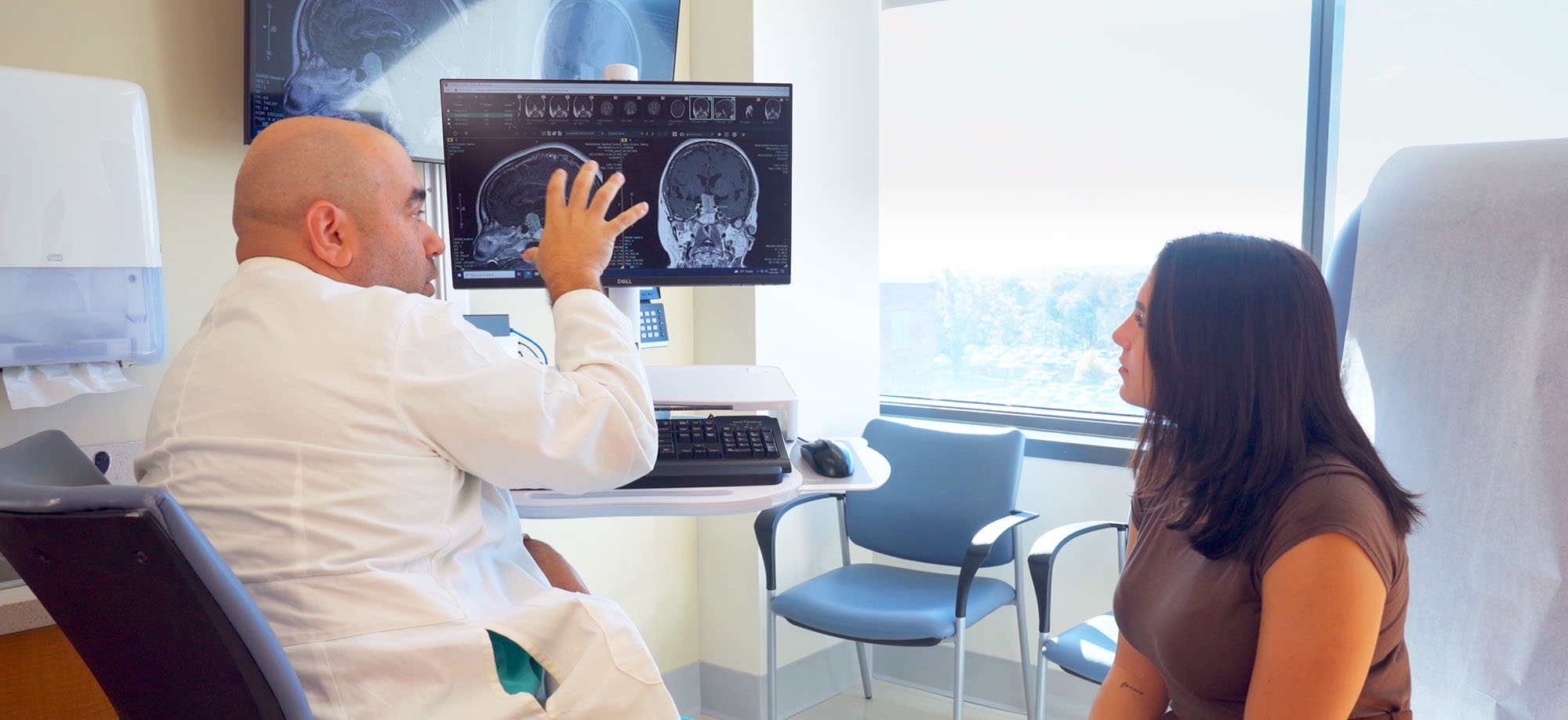
When you have symptoms affecting your brain, spine, nerves, or muscles, getting the right care can help you understand what is happening and what to do next. You may need answers about new symptoms, help managing an ongoing condition, or advanced treatment for a complex diagnosis.
At WMCHealth, neurosciences care brings together specialists in neurology, neurosurgery, stroke, epilepsy, neurocritical care, and rehabilitation. This team-based approach helps connect you with the right expertise for your needs.
Neurology and Neurosurgery Care at WMCHealth
Whether you need a neurologist or a neurosurgeon depends on your symptoms, diagnosis, and treatment options.
When You May Need a Neurologist
A neurologist diagnoses and treats conditions that often do not require surgery. You may see a neurologist for concerns such as headaches, seizures, memory changes, tremors, or sleep problems.
Neurologists may recommend testing, medication, lifestyle changes, monitoring, therapy, rehabilitation, or referral to another specialist.
When You May Need a Neurosurgeon
A neurosurgeon treats conditions that may require surgery or advanced procedures. You may see a neurosurgeon for concerns such as brain tumors, brain aneurysms, spine conditions, traumatic brain injury, or hydrocephalus.
Seeing a neurosurgeon does not always mean you need surgery. Your specialist can help determine whether surgery, monitoring, or another treatment is the right next step.
Merritt Kinon
Spine Surgery, Neurological Surgery
Locations:
-
100 Woods Rd ACP 4th Floor
Valhalla, NY 10595
 WMCHealth Provider
John Wainwright
Spine Surgery, Neurological Surgery
Locations:
-
100 Woods Rd ACP 4th Floor
Valhalla, NY 10595
WMCHealth Provider

Kelsey Kimble
Neurological Surgery
Locations:
-
100 Woods Rd ACP 4th Floor
Valhalla, NY 10595
WMCHealth Provider

Tamara Benoit
Neurological Surgery
Locations:
-
100 Woods Rd ACP 4th Floor
Valhalla, NY 10595
WMCHealth Provider

Chirag Gandhi
Neuroendovascular Surgery, Neurological Surgery
Locations:
-
100 Woods Rd ACP 4th Floor
Valhalla, NY 10595
WMCHealth Provider

Vishad Sukul
Neurological Surgery
Locations:
-
100 Woods Rd ACP 4th Floor
Valhalla, NY 10595
WMCHealth Provider

Justin Santarelli
Neuroendovascular Surgery, Neurological Surgery, Open Cerebrovascular Surgery
Locations:
-
100 Woods Rd ACP 4th Floor
Valhalla, NY 10595
WMCHealth Provider
Sebastian Rubino
Neurological Surgery
Locations:
-
257 Lafayette Ave MOB Suite 285
Suffern, NY 10901
WMCHealth Provider

Simon Hanft
Neurological Surgery
Locations:
-
100 Woods Rd ACP 4th Floor
Valhalla, NY 10595
WMCHealth Provider

Sherine Varghese
Neurological Surgery
Locations:
-
100 Woods Rd ACP 4th Floor
Valhalla, NY 10595
WMCHealth Provider
Avinash Mohan
Neurological Surgery, Pediatric Neurosurgery, Pediatric Spine Surgery
Locations:
-
100 Crystal Run Road Suite 108
Middletown, NY 10941
WMCHealth Provider

Carrie Muh
Pediatric Neurosurgery
Locations:
-
19 Bradhurst Avenue Suite 3050
Hawthorne, NY 10532
WMCHealth Provider

Stephanie Gandelman
Neurology, Neuroimmunology, Tele-Neurology
Locations:
-
19 Bradhurst Avenue Suite 3850 S
Hawthorne, NY 10532
WMCHealth Provider
Fawaz Al Mufti
Neurology
Locations:
-
100 Woods Rd ACP 4th Floor
Valhalla, NY 10595
WMCHealth Provider

Uchenna Okafo
Spine Surgery, Neurological Surgery, Neuroendovascular Surgery
Locations:
-
19 Baker Avenue Suite 302
Poughkeepsie, NY 12601
WMCHealth Provider

Gurmeen Kaur
Neuroendovascular Surgery, Neurology, Vascular Neurology, Tele-Neurology
Locations:
-
100 Woods Rd ACP 4th Floor
Valhalla, NY 10595
WMCHealth Provider
Alec Friedman
Neurology, Tele-Neurology, Neuroimmunology
Locations:
-
666 Lexington Ave Suite 208
Mount Kisco, NY 10549
WMCHealth Provider

Tatyana Gitlevich
Clinical Neurophysiology, Neurology, Epilepsy, Tele-Neurology
Locations:
-
19 Bradhurst Avenue Suite 3850 S
Hawthorne, NY 10532
WMCHealth Provider
Rachana Tyagi
Pediatric Spine Surgery, Neurological Surgery
Locations:
-
19 Baker Avenue Suite 302
Poughkeepsie, NY 12601
WMCHealth Provider

Lisha Melathe
Neurological Surgery
Locations:
-
100 Woods Rd ACP 4th Floor
Valhalla, NY 10595
WMCHealth Provider

Brain Health
Brain health is about supporting how your brain functions throughout every stage of life—not only treating disease after symptoms appear. At WMCHealth, specialists help patients understand risk factors, identify concerns early, and connect with care for memory changes, concussion or stroke recovery, and other neurological concerns.
This proactive approach supports cognitive, emotional, and neurological wellness over time.
Our Approach to Neurology and Neurosurgery
Your care plan depends on your diagnosis, symptoms, overall health, and goals. At WMCHealth, care may include diagnostic testing, medication management, advanced procedures, surgery, rehabilitation, clinical trials, or long-term support.
Diagnostic and Medical Care
Your care may begin with a neurological evaluation and diagnostic testing. Depending on your symptoms, your care team may recommend imaging, monitoring, medication, therapy, or ongoing follow-up.
These steps help your specialists better understand what may be causing your symptoms and which treatment options may fit your needs.
Advanced Procedures and Surgery
When surgery or a specialized procedure is the right next step, WMCHealth neurosurgeons offer a broad range of treatment capabilities. These include procedures for brain, spine, nerve, vascular, epilepsy, and movement disorder conditions.
Capabilities may include:
- Radiosurgery
- Epilepsy surgery
- Skull-base surgery
- Endoscopic surgery
- Cranial microsurgery
- Robotic spine surgery
- Peripheral nerve surgery
- Mechanical thrombectomy
- Movement disorder surgery
- Endovascular and open vascular surgery
- Minimally invasive and endoscopic spine surgery
Rehabilitation and Long-Term Support
Many neurological conditions require care beyond diagnosis or treatment. Your care may include support from rehabilitation medicine, nursing, neuropsychology, social work, physical therapy, psychology, and other specialists.
This support can help you manage symptoms, recover after treatment, and plan for ongoing needs.
Advanced Neurosciences Care Close to Home
WMCHealth specialists use advanced tools and technologies to support care for complex neurological conditions. These capabilities help your team diagnose conditions, plan treatment, perform procedures, and support recovery.
An Integrated Neurosciences Team
At WMCHealth, we emphasize effective and open communication with our patients and referring physicians. Our physicians are supported by dedicated physician assistants, nurse practitioners, registered nurses, therapists, psychologists, and social workers.
Our neurology and neurosurgery teams partner closely with other departments at WMCHealth, including:
- Emergency medicine
- Internal medicine
- Oncology
- Neuropathology
- Neuropsychology
- Neuroradiology
- Psychiatry
- Pain management
- Social work
Advanced Technology and Treatment Options
WMCHealth uses tools such as artificial intelligence for advanced stroke detection, flow diverter stents for cerebral aneurysm care, and advanced imaging in the Hudson Valley’s only hybrid operating room.
Other options may include responsive neurostimulation therapy, endoscopic spine surgery, robotic spine surgery, and medication that helps brain tumors glow during surgery.
Specialized Care for Complex Neurological Conditions
If you experience a severe stroke, brain injury, or other neurological emergency, WMCHealth provides specialized care when time matters most. Our dedicated Neuro-ICU is staffed by neurointensivists, who are doctors trained to care for neurological emergencies.
At Westchester Medical Center, the flagship of the Westchester Medical Center Health Network, you have access to:
- the region’s only Level I Trauma Center. Our teams provide immediate care for complex neurological emergencies, including stroke and traumatic brain injury.
- the region’s only Level 4 Epilepsy Center. WMCHealth offers advanced care for seizure disorders. This may include diagnostic testing, medical therapies, neurostimulation, or epilepsy surgery for complex cases.
- the WMCHealth Comprehensive Stroke Center. Stroke specialists at Valhalla are available 24/7 to provide rapid evaluation and treatment that can help reduce the risk of long-term disability.
WMCHealth also provides thrombectomy-capable stroke care. Specialists can perform minimally invasive clot-removal procedures for certain types of stroke, restoring blood flow to the brain quickly and safely.
Stroke, Epilepsy, and Brain Tumor Care
Rapid diagnosis and treatment can help improve outcomes and reduce the risk of long-term disability after a stroke. WMCHealth provides stroke and cerebrovascular care through a regional network that includes Comprehensive and Primary Stroke Centers.
For certain brain tumors, Westchester Medical Center, the flagship of the Westchester Medical Center Health Network, was the first neurosurgical oncology program in the Hudson Valley to offer GammaTile. This targeted therapy may help delay tumor progression, spare healthy tissue, and reduce post-surgical radiation treatments.
Research, Education, and Clinical Trials
WMCHealth’s Neurosciences program is based at the Hudson Valley’s only academic medical center. This setting may give patients access to clinical trials, emerging therapies, and specialists involved in neuroscience research and education.
Our stroke teams also help advance the field. Through our partnership with New York Medical College, we support research efforts and train medical students and residents. This academic environment ensures your care reflects the newest knowledge and practices.