
Medical Reviewed by: Shir Miretzky, DO
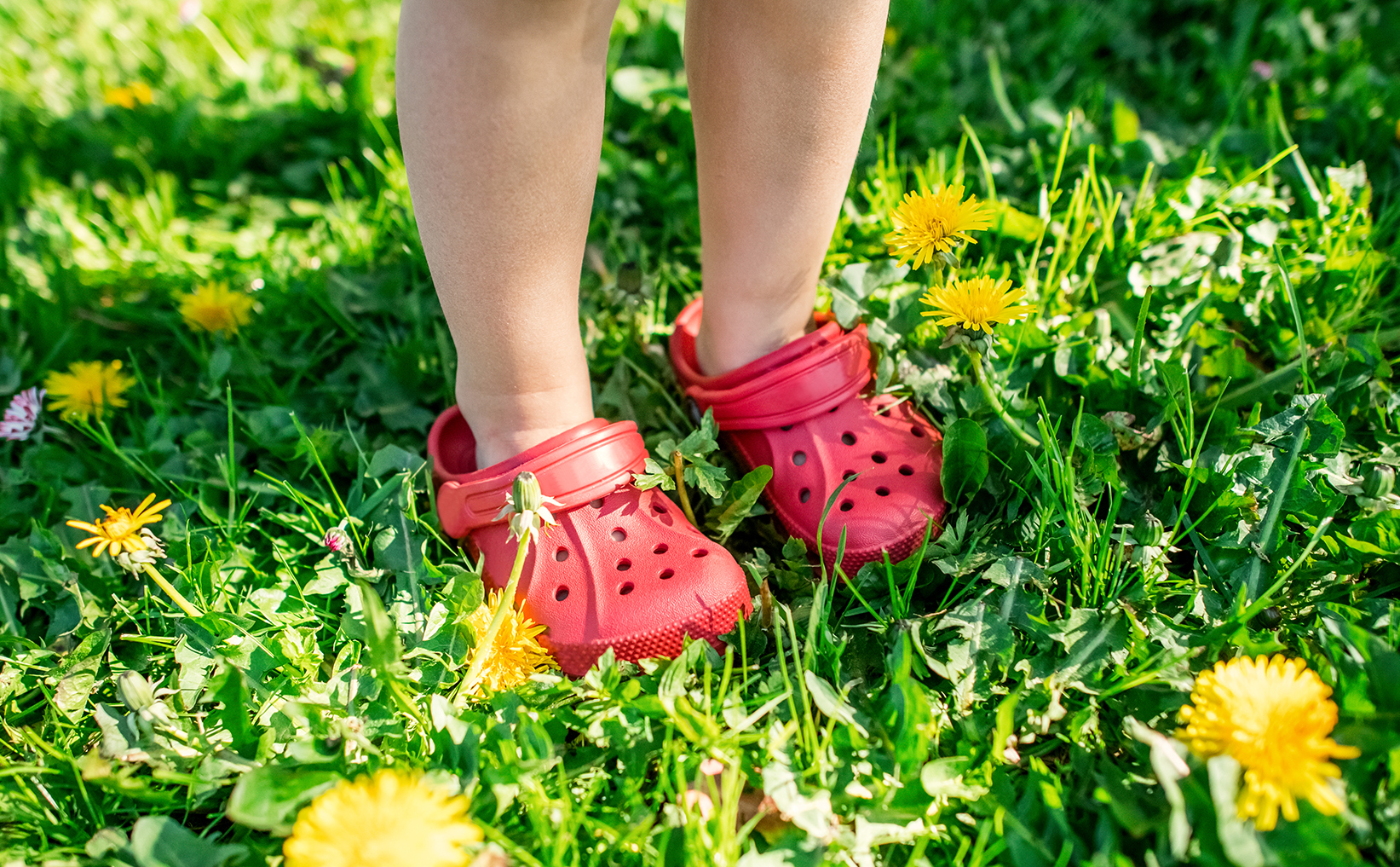
They come in every color imaginable, snap on in seconds and have become a staple in kids’ closets across the country. are beloved for their ease and fun, but are they actually good for growing feet?
Dr. Shir Miretzky’s take on Crocs®: They have a place in your child’s shoe rotation, but probably not the place most families give them. She says, “As both a pediatrician and a mother of two toddlers, I know that early childhood is a crucial time for developing balance, coordination, and gait. Falls and stumbles are an expected part of this learning process, but children benefit from well-fitting, supportive footwear that provides stability and traction while allowing natural foot development. Choosing the right shoes can help support healthy movement as they gain confidence and independence.”
Pros and Cons
There’s a reason Crocs are popular, and Dr. Miretzky isn’t dismissive of their appeal. She acknowledges their convenience “especially when you’re planning a quick trip to the beach or pool.” They’re lightweight, easy to clean and kids genuinely love customizing them. For short-duration, low-activity use, they can be a reasonable choice.
The problems start when Crocs become an all-day, every-day shoe. Because the heel strap is so often left unclipped, children instinctively grip the shoe with their toes to keep it from slipping off. Over time, that habit puts excess strain on the foot, and Dr. Miretzky warns, “It can lead to heel pain, arch discomfort and even hammertoes.”
There’s also the question of structural support. Developing feet need stability and proper arch support during the years when bones, tendons and muscles are still forming. Crocs simply don’t offer that. The roomy, flexible design that makes them comfortable also makes them poorly suited for long walks, running or active play.
Worn without socks, as most kids do, Crocs create a warm, moist environment. That combination can encourage fungal and viral infections, including athlete’s foot and plantar warts. The foam material also doesn’t wick away moisture, increasing the likelihood of blisters with extended wear.
What’s the Shoe Actually Made Of?
There’s another layer to the Crocs conversation that doesn’t get talked about much: what the shoes are made of, and what that might mean for kids who wear them constantly.
Crocs are made from synthetic foam. Like most shoes, they contain plastics, dyes and chemical compounds used in manufacturing. The feet are one of the most absorbent areas of the body; they’re in constant contact with the ground and, by extension, whatever materials surround them. That’s worth keeping in mind when a child is wearing the same pair of foam shoes, without socks, for hours at a stretch.
The research on footwear and chemical exposure is still emerging, but what exists raises some reasonable questions. Shoe factory workers have historically shown health effects from chemical exposure during manufacturing. Allergic skin reactions attributed to materials in shoe components have been documented in medical literature. A 2023 industry report found that several popular shoe brands contained levels of certain harmful substances that exceeded safety thresholds, though loose regulations have led to limited accountability for companies.
Heat appears to play a role, too. There has been growing concern and some viral attention on social media about foam shoes in warm weather, with the idea that heat may accelerate the release of particles from the material into the skin. The science here is preliminary, but it’s a reasonable concern that doctors and researchers are paying attention to.
None of this means Crocs are dangerous. But it does add another reason to think twice about letting them become the default all-day shoe, especially for young kids whose bodies may be more sensitive to prolonged exposure.
What Parents Can Do
The bottom line, according to Dr. Miretzky, is moderation. “Parents should make sure Crocs aren’t worn all day, every day.” For longer wear, a supportive sandal or sneaker with a firm heel counter, proper arch support and a secure front and back closure is the best choice.
Parents should also watch for warning signs. If your child struggles to keep pace during walks, frequently trips or complains of tired or aching feet, the shoes may be contributing to the problem. Children don’t always connect foot discomfort to their footwear, which is where an added pediatric or podiatry consultation can be helpful.
Crocs can be part of a child’s wardrobe, just not the whole of it. A beach trip, a quick errand, a morning in the backyard. That’s what they’re made for. Active school days, long walks and growing feet deserve more.
At WMCHealth, our pediatric and podiatry teams provide comprehensive foot and wound care for patients of all ages. To schedule an appointment with a pediatric specialist, call 914.493.7000 or visit Maria Fareri Children’s Hospital Services. For more information about the Foot Wound Care Program, visit our website or call 845.987.5067.