
Medically reviewed by Anish Thomas, MD
Thanksgiving often means a busy kitchen, a crowded refrigerator and several dishes cooking at once. With so much going on, it’s easy to overlook a few basic food safety steps.
Foodborne illness can cause symptoms such as nausea, vomiting, diarrhea, stomach cramps and fever. Fortunately, careful preparation, cooking and storage can help keep your Thanksgiving meal safe from the first slice of turkey to the last helping of leftovers.
Give your turkey enough time to thaw
If you’re starting with a frozen turkey, plan ahead. Never thaw a turkey on the kitchen counter. Even if the inside is still frozen, the outside can warm enough for bacteria to multiply.
The safest option is to thaw your turkey in the refrigerator. Allow about 24 hours for every four to five pounds of turkey. Keep it in its original packaging and place it in a container or pan to prevent juices from dripping onto other foods.
If you’re short on time, you can also thaw a turkey in cold water or the microwave, and then cook immediately.
Keep raw turkey separate
Raw poultry and its juices can carry bacteria that can spread to your hands, countertops, utensils and other foods.
Wash your hands with soap and water for at least 20 seconds before and after handling raw turkey. Use separate cutting boards and utensils for raw poultry and ready-to-eat foods, such as vegetables or bread. Clean counters and other surfaces after they come into contact with raw meat.
Additionally, don’t wash or rinse raw turkey before cooking. Doing so can spread harmful bacteria and contaminate nearby surfaces and foods.
Don’t rely on cooking time alone
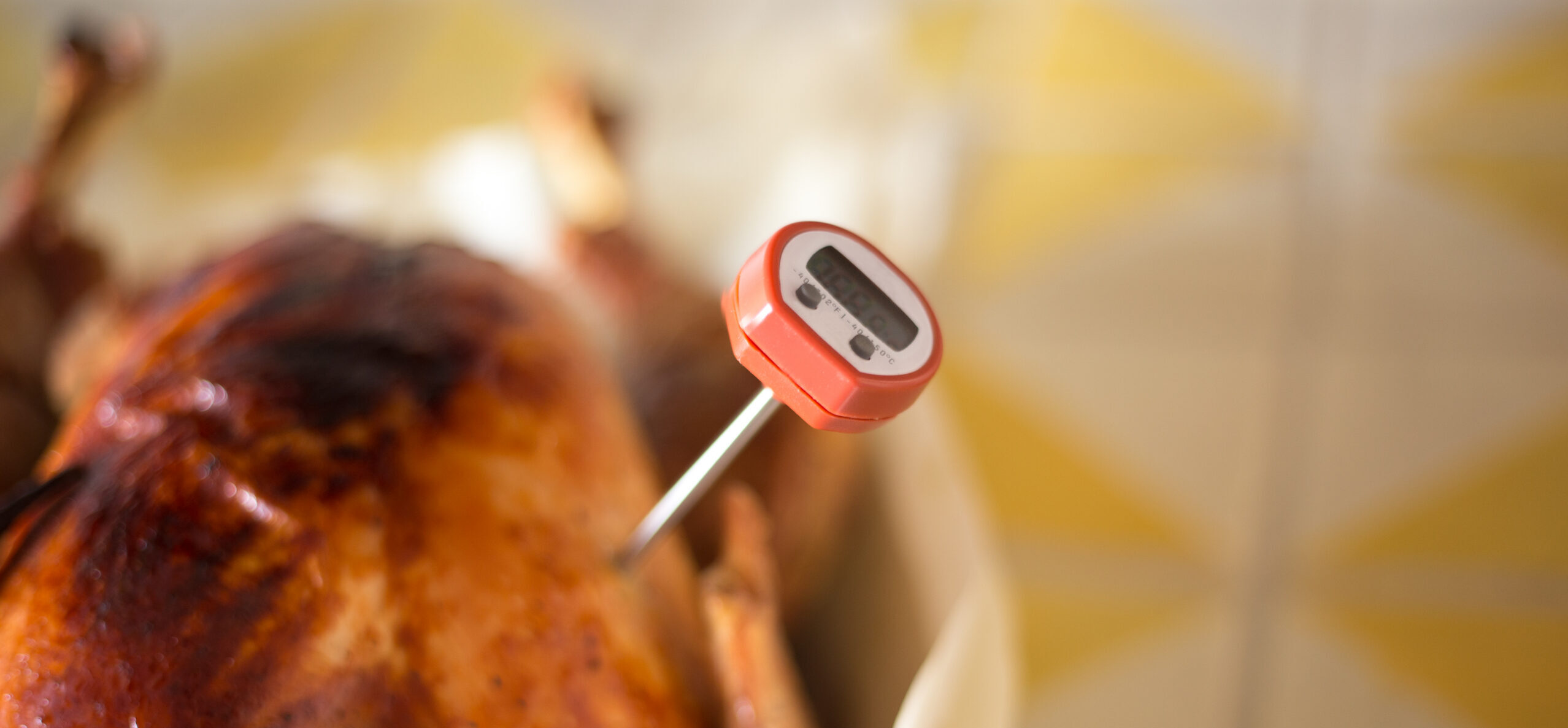
A golden-brown turkey may look ready, but appearance isn’t enough to tell you whether it is safe to eat. Use a food thermometer to make sure your turkey reaches an internal temperature of at least 165°F.
For a whole turkey, check the temperature in the thickest part of the breast, the innermost part of the thigh and the innermost part of the wing without touching the bone.
If you cook stuffing inside the turkey, the center of the stuffing must also reach 165°F. Cooking stuffing separately can make it easier to ensure that both the turkey and stuffing reach a safe temperature.
Remember food safety for side dishes, too
Turkey may get most of the attention, but other Thanksgiving foods also require careful handling.
Keep cold foods at 40°F or below and hot foods at 140°F or above until you’re ready to serve them. Avoid leaving perishable foods such as turkey, gravy, casseroles and dairy-based dishes sitting at room temperature for more than two hours.
If you’re preparing food ahead of time, refrigerate it promptly rather than leaving it on the counter until dinner.
Store leftovers safely
You can safely enjoy Thanksgiving leftovers if you handle and store them properly. Refrigerate leftover turkey, stuffing, gravy, casseroles and other perishable foods within two hours of serving or within one hour if the surrounding temperature is above 90°F.
Divide large portions into shallow containers to help food cool quickly. Refrigerated leftovers should generally be eaten within three to four days or frozen for longer storage.
Know when food poisoning needs medical attention
Mild foodborne illness often improves with rest and fluids, but some symptoms may require medical care. Seek care if you experience:
- Bloody diarrhea
- Diarrhea lasting more than three days
- A fever above 102°F
- Vomiting so frequently that fluids cannot be kept down
- Signs of dehydration, including decreased urination, dry mouth and throat or dizziness when standing
Older adults, young children, pregnant people and people with weakened immune systems can be at greater risk for serious complications from foodborne illness. Infections like listeriosis can have serious consequences during pregnancy, even when maternal symptoms are relatively mild.
A little extra care in the kitchen can help ensure Thanksgiving memories are about time spent around the table, not an unexpected trip for medical care.
If you or a family member develops severe symptoms of foodborne illness, WMCHealth is here to help. Find an emergency department near you for the care you need.