

If you have advanced kidney disease, your doctor may recommend dialysis to help your body perform the essential work your kidneys can no longer do. Dialysis can help remove waste and excess fluid from your blood while supporting your health over time.
Outpatient dialysis is available through the HealthAlliance Hospital Dialysis Center in Kingston, a member of the Westchester Medical Center Health Network (WMCHealth). We offer in-center hemodialysis, home peritoneal dialysis, and the education and support you need throughout your treatment.
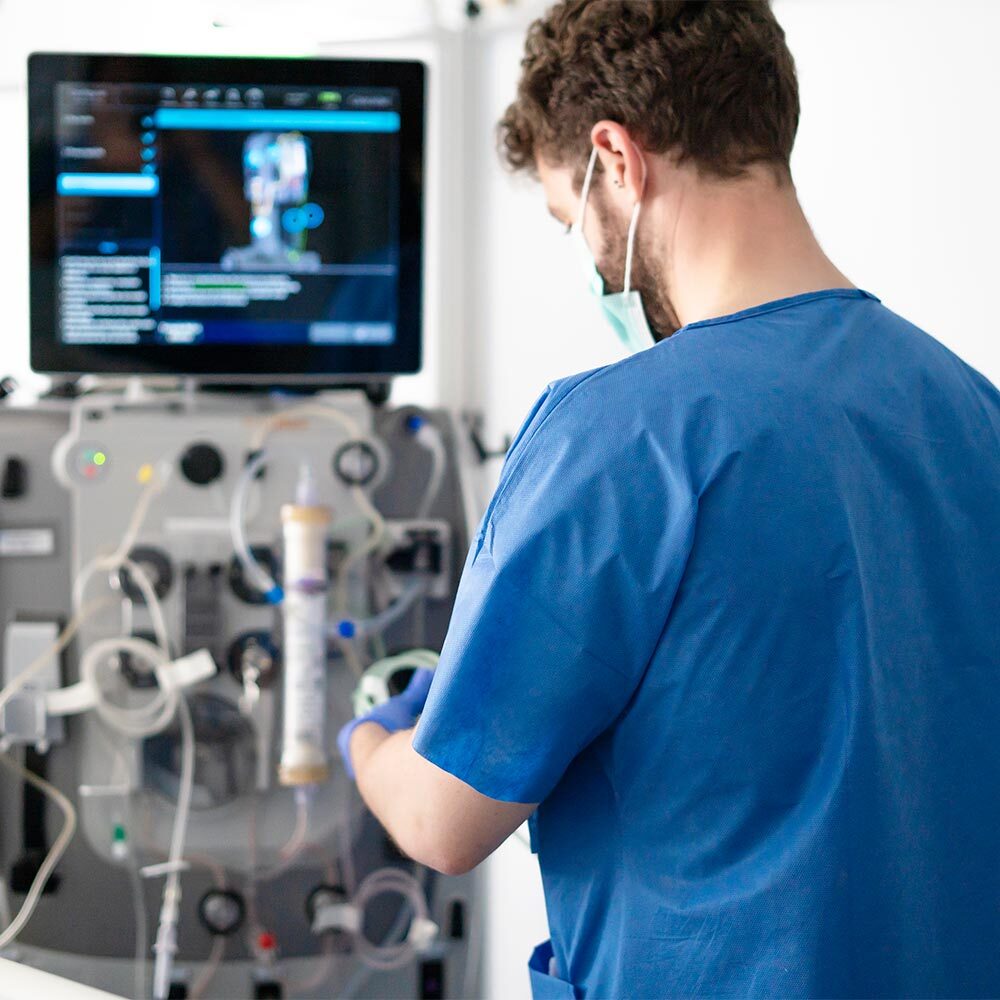
When Is Dialysis Needed?
Dialysis filters your blood to remove waste and excess fluid when your kidneys can no longer perform this function.
Your kidneys also help balance electrolytes, regulate blood pressure, make red blood cells, and support bone health. When they become damaged, waste can build up in your blood and make you sick.
People with progressive kidney disease may eventually need dialysis or a kidney transplant. Dialysis can replace critical kidney functions when a transplant is not immediately available.
Types of Dialysis We Offer
The HealthAlliance Hospital Dialysis Center offers in-center hemodialysis as well as training and support for home peritoneal dialysis.
In-Center Hemodialysis
Hemodialysis uses a machine and a filter called a dialyzer to slowly clean your blood. The filtered blood then returns to your body.
Most patients visit the center three times each week. Each treatment generally lasts three to five hours.
Home Peritoneal Dialysis
Peritoneal dialysis uses the lining of your abdomen to help remove waste and excess fluid.
A solution called dialysate enters your abdomen through a catheter. It remains there for two to six hours before being drained and discarded.
Our team provides training and 24/7 support to help you manage peritoneal dialysis at home.
What to Know About Your Dialysis Treatment
Your preparation and treatment experience will depend on the type of dialysis you receive. Your care team will explain which dialysis approach may best support your medical needs and daily routine.
Preparing Your Body for Dialysis
Before dialysis begins, you will need a minor procedure to create access for treatment. The type of access depends on whether you receive hemodialysis or peritoneal dialysis.
For hemodialysis, a surgeon creates an access point in your arm. This may be an arteriovenous fistula, which connects an artery and vein, or an arteriovenous graft, which uses a synthetic tube beneath the skin.
For peritoneal dialysis, a surgeon places a catheter in your abdomen. This tube allows dialysate to move into and out of your body so you can complete treatments at home after training.
What to Expect During In-Center Hemodialysis
During treatment:
- You will be connected to a dialysis machine.
- The dialyzer will slowly clean your blood.
- The machine will return the filtered blood to your body.
- Your care team will monitor your treatment using advanced equipment.
- Real-time monitoring will continue throughout your dialysis session.
What to Expect During Home Peritoneal Dialysis
During treatment:
- Dialysate enters your abdomen through the catheter.
- The solution remains there for two to six hours.
- It removes waste and excess fluid from your body.
- You drain and discard the used solution afterward.
What to Expect After Beginning Dialysis
Dialysis is an ongoing treatment rather than a one-time procedure. Whether you receive dialysis at the center or at home, your care team will continue providing education and resources throughout your care.
If you receive home peritoneal dialysis, your care team will train you before you begin treatment at home. You will also have ongoing support when questions or concerns arise.



Susmitha Dhanyamraju
Nephrology
Locations:
-
1 Webster Ave Suite 502
Poughkeepsie, NY 12601
 WMCHealth Provider
Supporting You Throughout Dialysis
Kidney care involves more than dialysis sessions alone. Our multidisciplinary team works together to support your treatment and overall well-being.
The center features 30 dedicated hemodialysis stations designed to help staff monitor patients throughout treatment. Advanced equipment also provides real-time monitoring during each dialysis session.
Your care team may include:
- Nephrologists
- Registered nurses
- Registered dietitians
- Licensed social workers
- A transplant coordinator
The center also provides dietary consultations, kidney disease education, psychosocial support, and home peritoneal dialysis training.
If you have chronic kidney disease, we can arrange education, lifestyle support, and nutrition guidance. A clinical dietitian or renal educator can help you learn more about managing kidney disease.