
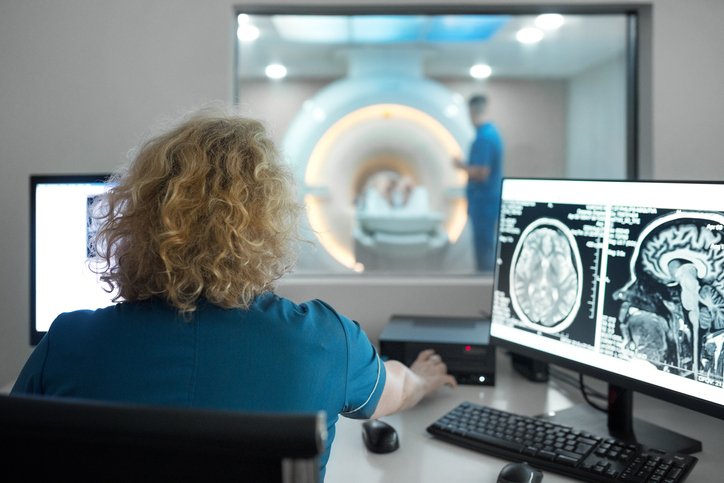
Neurology: Clinical Studies Open For Enrollment
-
Eligibility
- Age 18 years or older
- Unilateral symptomatic stroke due to ischemia or intracerebral hemorrhage. (Note: Bilateral acute stroke is permitted if the stroke that is contralateral to the index stroke is asymptomatic).
- Ischemic stroke cohort will consist of at least 557 participants and intracerebral hemorrhage cohort [exploratory cohort] will consist of up to 100 participants.
- Motor deficits in the acutely affected UE, defined as a Shoulder Abduction and Finger Extension (SAFE) score ≤ 8 out of 10 points20,61 (i.e., excluding full or nearly full motor strength in both shoulder abduction and finger extension) within 48 to 96 hours of stroke onset (or time last known well).
- SAFE score is determined by measuring the strength of shoulder abduction and finger extension, separately, each having a Medical Research Council grade from 0 to 5, then summing; scores range from 0 to 10.
- Provision of signed and dated informed consent form within 24 to 96 hours of stroke onset, (or time last known well). Note: Participant is considered “enrolled” upon starting TMS (at least one stimulation is delivered) or starting study-specific MRI pulse sequence (at least one MRI beep occurs)
- Stated willingness to comply with all study procedures and availability for the duration of the study, including Day 90 visit which must occur in-person.
- Fluent in English or Spanish
- Exclusion criteria:
- UE injury or conditions on paretic side that limited use prior to the stroke
- Legally blind
- Dense sensory loss on paretic side indicated by a score of 2 on NIHSS sensory item
- Unable to abduct the shoulder or extend the fingers of the non-paretic UE on verbal command
- Isolated cerebellar stroke
- Symptomatic stroke in any location within 30 days prior to index stroke.
- Co-enrollment in a trial of an intervention targeting the incident stroke (acute treatment or rehabilitation/recovery intervention) after baseline assessments for VERIFY are initiated
- Known or expected inability to maintain follow-up with study procedures through 90 days
- Cognitive or communication impairment precluding informed consent by the participant.
- Major medical, neurological, or psychiatric condition that would substantially affect functional status
- Non-cerebrovascular diagnosis associated with unlikely survival at 90 days
- Pregnancy
- Contraindication to noncontrast MRI (certain metallic implants, metallic foreign bodies or severe claustrophobia)
- Contraindication to TMS
- Cardiac pacemaker
- Any electronic devices in the body at or above the level of the seventh cervical vertebra (such as cochlear implant, cortical stimulator, deep brain stimulator, vagus nerve stimulator, cervical spine epidural stimulator, or ventriculoperitoneal shunt)
- Ferromagnetic intracranial metallic implant
- Skull defect related to current stroke
- Seizure after onset of current stroke
- Seizure within the last 12 months while taking anti-epileptic medications
- Previous serious adverse reaction to TMS
- Anticipated inability to perform study procedures within 168 hours of symptom onset
- Unable to perform behavioral assessments within 48-120 hours of symptom onset (or time last known well).
- Unable to receive TMS within 72-168 hours or get MRI within 48-168 hours of symptom onset (or time last known well).
Enrollment Status: Actively enrolling
Study Information
ClinicalTrials.gov | NCT05338697
Principal Investigator
Kitago Tomoko, MD
Contact for Study Screening
-
Eligibility
- Male or female patients between 18 – 90 years of age.
- Right-handed prior to stroke
- English-speaking (monolingual)
- History of single left-hemisphere stroke at least 6 months prior to enrollment
- Presence of aphasia and naming deficits on Western Aphasia Battery (WAB-R)
- Comprehension score above 4 on WAB-R
- Unilateral upper limb paresis (Fugl-Meyer Upper Extremity score <56)
- Documentation of signed Informed Consent by the study participant.
- Exclusion criteria:
- Diagnosis or history of speech impairment prior to stroke
- Severely limited speech output (score below 2 on spontaneous speech portion of WAB-R)
- Inability to perform screening tasks due to severe language and/or cognitive impairment
- Condition limiting passive movement in the range of motion required for robotic therapy (e.g. fixed contracture)
- Any medical or psychiatric condition that may impact participation or compliance with study procedures or activities in the opinion of the investigator
Enrollment Status: Actively enrolling
Study Information
ClinicalTrials.gov | NCT07000019
Principal Investigator
Tomoko Kitago, MD
Contact for Study Screening
-
Eligibility
- Male or female patients must be ≥18 years of age.
- Was or currently is an active patient of the health system’s NMOSD clinic/ provider group.
- Has met the 2015 international consensus diagnostic criteria for NMOSD diagnosis and AQP4 positive serum testing on a validated clinical laboratory assay evaluation including the relevant review of the disease history with the patient.
- Had at least one dose of RTX following the diagnosis of NMOSD.
- Had a minimum of 6 months of follow up post RTX initiation measured by any clinical contact with the healthcare system.
- Exclusion criteria:
- Was in an NMOSD clinical trial at any point during the study observation period
Enrollment Status: Actively enrolling
Principal Investigator
Stephanie Gandelman, MD
Contact for Study Screening