
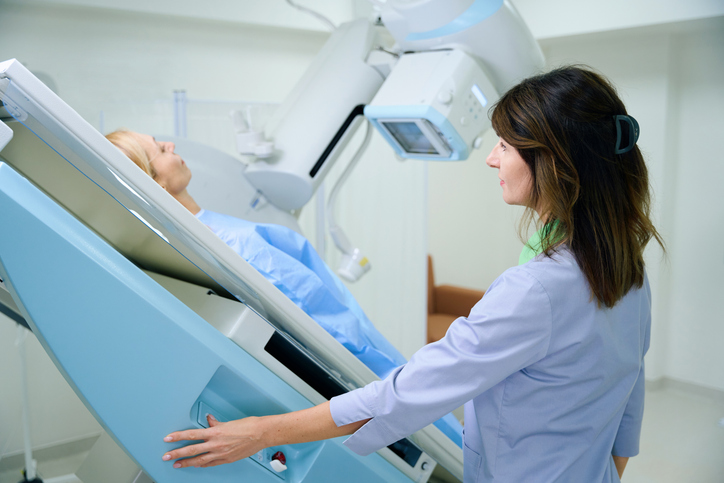
If you’re experiencing unexplained dizziness or fainting, a tilt table test may help identify the cause. It shows whether your symptoms are linked to changes in your blood pressure or heart rhythm.
At Westchester Medical Center, the flagship of the Westchester Medical Center Health Network, we provide tilt table testing led by cardiac electrophysiology specialists. This means you receive expert care from physicians trained to diagnose conditions involving your heart’s rhythm and nervous system.
What Is a Tilt Table Test?
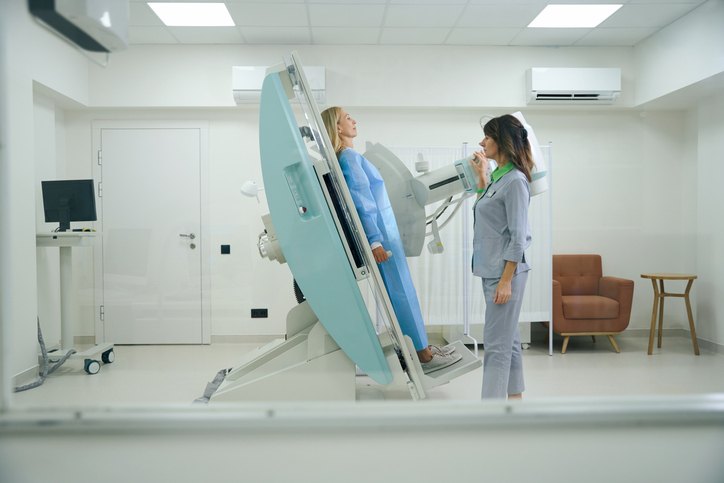
A tilt table test checks how your body responds when you go from lying down to standing up. During the test, your heart rate and blood pressure are closely monitored to see how they change with position.
This procedure helps diagnose conditions such as vasovagal syncope, orthostatic hypotension, and autonomic dysfunction. It is often ordered when initial cardiac testing does not explain these symptoms.
What to Know About Your Tilt Table Test
Here’s what to expect before, during, and after your tilt table test.
How to Prepare for a Tilt Table Test
Follow these common steps to help your tilt table test go smoothly and give clear results:
- Do not eat or drink for four to six hours before the test.
- Wear comfortable, two-piece clothing.
- Avoid lotion or oils on your skin.
- Ask your doctor if you need to stop taking any medications beforehand.
- Let your care team know if you’re pregnant or have had a recent illness.
What to Expect During the Tilt Table Test
The test takes place in our cardiac testing lab, performed by one of our cardiologists:
- You will lie flat on a motorized table equipped with straps for safety. Your feet will be positioned on a foot rest.
- You will have small ECG patches placed on your chest and a blood pressure cuff on your arm. These are used to track your heart rate and blood pressure throughout the test.
- The table is slowly tilted—usually up to 60 to 70 degrees—to act like you’re standing.
- You will remain upright for up to 45 minutes, or until symptoms and/or significant changes in heart rate or blood pressure appear.
- Sometimes, medication is used to provoke a response if no symptoms occur initially.
The entire test typically lasts 45 to 90 minutes.
What to Expect Afterwards
You may feel tired or lightheaded for a short period after the test, but you can likely resume regular activity the same day.
The results and interpretation will be sent to your provider, who will review the tilt table test results with you. Based on your results, you may need more tests or a follow-up visit with a WMCHealth heart rhythm specialist. Or, a treatment plan may include hydration, medication or lifestyle adjustments.

John Zimmerman
Clinical Cardiac Electrophysiology
Locations:
-
257 Lafayette Ave Suite 330
Suffern, NY 10901
 WMCHealth Provider

Hratch Kazanjian
Cardiovascular Disease
Locations:
-
30 Hatfield Ln
Goshen, NY 10924
WMCHealth Provider
Aneta Dimova
Cardiovascular Disease
Locations:
-
111 Marys Avenue Suite 3
Kingston, NY 12401
WMCHealth Provider

Andrew Shih
Cardiovascular Disease
Locations:
-
257 Lafayette Avenue Suite 200
Suffern, NY 10920
WMCHealth Provider

Sharmila Sarkar
Cardiovascular Disease
Locations:
-
1 Crossfield Avenue Suite 101
West Nyack, NY 10994
WMCHealth Provider

Ahmed Alabbady
Interventional Cardiology
Locations:
-
12 Liberty Square Mall
Stony Point, NY 10980
WMCHealth Provider

Richard Cantor
Cardiovascular Disease
Locations:
-
2 Executive Blvd
Suffern, NY 10901
WMCHealth Provider

Adrienne Rascoe
Cardiovascular Disease
Locations:
-
575 Hudson Valley Avenue Suite 200
New Windsor, NY 12553
WMCHealth Provider
Dominica Potenza
Cardiovascular Disease
Locations:
-
100 Woods Road ACP 1st Floor
Valhalla, NY 10595
WMCHealth Provider
Gladys Pacenza
Cardiovascular Disease
Locations:
-
575 Hudson Valley Avenue Suite 200
New Windsor, NY 12553
WMCHealth Provider
Shubnum Singh
Cardiovascular Disease
Locations:
-
972 Route 45 Suite 103
Pomona, NY 10970
WMCHealth Provider
Muhammad Raufi
Interventional Cardiology
Locations:
-
575 Hudson Valley Avenue Suite 200
New Windsor, NY 12553
WMCHealth Provider
Daisy Yohannan
Cardiovascular Disease
Locations:
-
100 Woods Road ACP 1st Floor
Valhalla, NY 10595
WMCHealth Provider
Yoram Amsalem
Interventional Cardiology
Locations:
-
257 Lafayette Ave Suite 300
Suffern, NY 10901
WMCHealth Provider

Cary Hirsch
Interventional Cardiology
Locations:
-
257 Lafayette Ave Suite 300
Suffern, NY 10901
WMCHealth Provider

Patricia Rainaldi
Cardiovascular Disease
Locations:
-
575 Hudson Valley Avenue Suite 200
New Windsor, NY 12553
WMCHealth Provider
Jiji Abraham
Cardiovascular Disease
Locations:
-
100 Woods Road ACP 1st Floor
Valhalla, NY 10595
WMCHealth Provider

Andrew Najovits
Cardiovascular Disease
Locations:
-
257 Lafayette Ave Suite 300
Suffern, NY 10901
WMCHealth Provider