
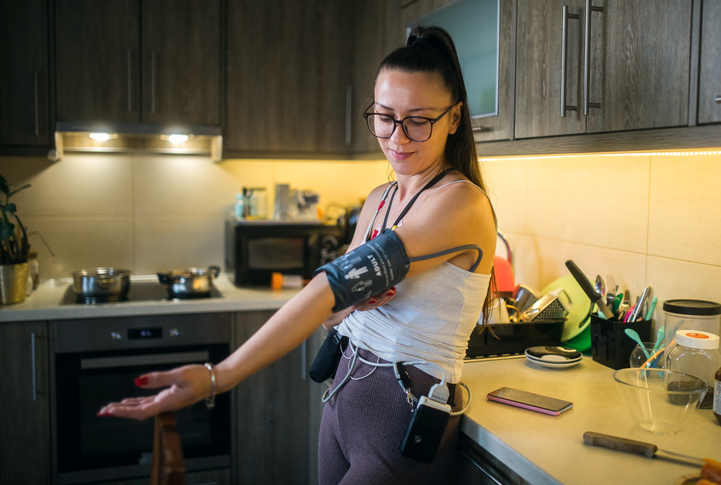
Sometimes, your heart may not show a problem during a regular doctor visit. An ambulatory ECG monitor can track your heartbeat for up to two weeks to find issues that come and go. If you’ve felt dizzy or had fluttering in your chest, this simple test can help find the cause.
At Westchester Medical Center, the flagship of the Westchester Medical Center Health Network (WMCHealth), we use ambulatory ECG monitors to check how well your heart is working. Checking your heart regularly helps catch small problems before they become big ones. Our cardiac testing approach is one of many ways we strive to give you complete heart care close to home.
What is Ambulatory Electrocardiography (ECG or EKG) Monitoring?
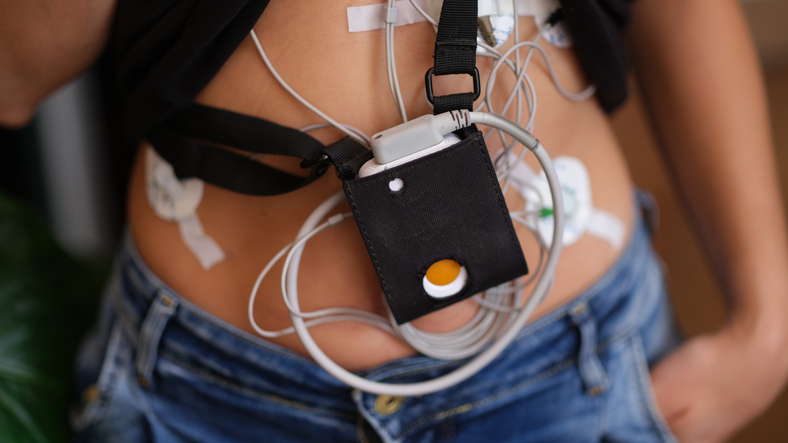
- Skipped beats
- Dizziness or fainting
- Rapid or irregular heartbeat
- Unexplained fatigue or shortness of breath
What to Know About Your Holter Monitoring
Ambulatory monitoring is easy to use and allows you to go about your daily routine while your heart is being recorded.
How to Prepare
- Wear comfortable, loose-fitting clothing. This allows your technician to place electrodes (small, sticky patches) on your chest more easily.
- Don’t use lotions, oils, or powders on your chest before the test.
- Your care team will tell you if you need to change how you bathe, take medicine, or stay active.
What to Expect During Ambulatory Electrocardiography Monitoring
- A technician will place the adhesive patch monitor or multiple electrodes on your chest depending upon the type of monitor your provider requests.
- If you have hair on your chest, the technician may need to shave the skin in the area where the adhesive patch monitor or electrodes are to be placed.
- You will wear the monitor for up to two weeks. The time frame may vary depending upon what your provider requests.
- You’ll be asked to keep a diary of your activities and symptoms during the monitoring period.
- The device will record your heart’s activity continuously until you return it.
- Some monitors store all of your heart rhythm information so that it can only be examined by your provider after you return the device. These devices are sometimes called extended Holter monitors.
- Other devices may relay information about your heart rhythm to your provider even while you are wearing the device. Theses devices are sometimes called mobile outpatient cardiac telemetry (MCOT).
What to Expect Afterwards
When your test is done, you will return the monitor by mail in the packaging provided. It may take your provider several days from the time you mail the device back until they can review your ECG rhythm. Your provider will look at your results alongside your symptom diary and talk with you about what they mean.
You may need more tests or treatment, depending on what the monitor shows. Your care team will explain the next steps and answer any questions you have.

John Zimmerman
Clinical Cardiac Electrophysiology
Locations:
-
257 Lafayette Ave Suite 330
Suffern, NY 10901
 WMCHealth Provider

Hratch Kazanjian
Cardiovascular Disease
Locations:
-
30 Hatfield Ln
Goshen, NY 10924
WMCHealth Provider
Aneta Dimova
Cardiovascular Disease
Locations:
-
111 Marys Avenue Suite 3
Kingston, NY 12401
WMCHealth Provider

Andrew Shih
Cardiovascular Disease
Locations:
-
257 Lafayette Avenue Suite 200
Suffern, NY 10920
WMCHealth Provider

Sharmila Sarkar
Cardiovascular Disease
Locations:
-
1 Crossfield Avenue Suite 101
West Nyack, NY 10994
WMCHealth Provider

Richard Cantor
Cardiovascular Disease
Locations:
-
2 Executive Blvd
Suffern, NY 10901
WMCHealth Provider

Ahmed Alabbady
Interventional Cardiology
Locations:
-
1 Crossfield Avenue Suite 101
West Nyack, NY 10994
WMCHealth Provider

Adrienne Rascoe
Cardiovascular Disease
Locations:
-
575 Hudson Valley Avenue Suite 200
New Windsor, NY 12553
WMCHealth Provider
Dominica Potenza
Cardiovascular Disease
Locations:
-
100 Woods Road ACP 1st Floor
Valhalla, NY 10595
WMCHealth Provider
Gladys Pacenza
Cardiovascular Disease
Locations:
-
575 Hudson Valley Avenue Suite 200
New Windsor, NY 12553
WMCHealth Provider
Shubnum Singh
Cardiovascular Disease
Locations:
-
972 Route 45 Suite 103
Pomona, NY 10970
WMCHealth Provider
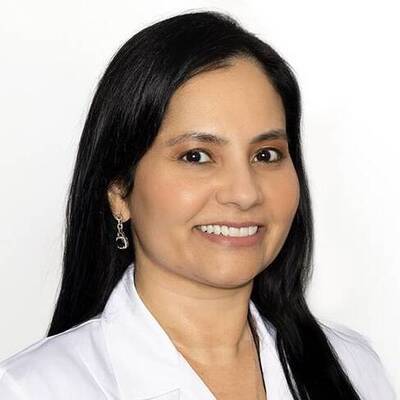
Jiji Abraham
Cardiovascular Disease
Locations:
-
100 Woods Road ACP 1st Floor
Valhalla, NY 10595
WMCHealth Provider
Muhammad Raufi
Interventional Cardiology
Locations:
-
575 Hudson Valley Avenue Suite 200
New Windsor, NY 12553
WMCHealth Provider
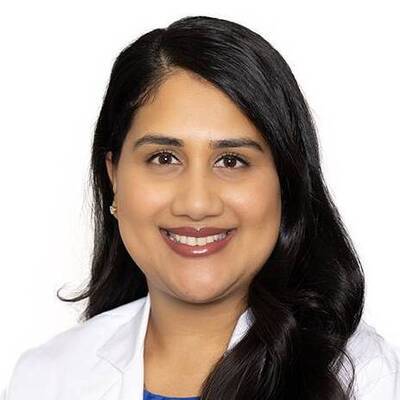
Daisy Yohannan
Cardiovascular Disease
Locations:
-
100 Woods Road ACP 1st Floor
Valhalla, NY 10595
WMCHealth Provider

Patricia Rainaldi
Cardiovascular Disease
Locations:
-
575 Hudson Valley Avenue Suite 200
New Windsor, NY 12553
WMCHealth Provider
Yoram Amsalem
Interventional Cardiology
Locations:
-
257 Lafayette Ave Suite 300
Suffern, NY 10901
WMCHealth Provider

Andrew Najovits
Cardiovascular Disease
Locations:
-
257 Lafayette Ave Suite 300
Suffern, NY 10901
WMCHealth Provider

Arvind Agarwal
Cardiovascular Disease
Locations:
-
12 Liberty Square Mall
Stony Point, NY 10980
WMCHealth Provider