

When you have an irregular or rapid heartbeat like atrial fibrillation, supraventricular tachycardia, or ventricular tachycardia, you want a solution that lasts. Catheter ablation is a common treatment that can help you feel better, and in some cases, live longer. It’s a safe and effective way to get your heart back into a steady rhythm.
At Westchester Medical Center, the flagship of the Westchester Medical Center Health Network (WMCHealth), our expert electrophysiology team performs advanced ablation procedures using state-of-the-art mapping and imaging systems. We’re here to help you reclaim your quality of life—closer to home and with the high-level care you deserve.
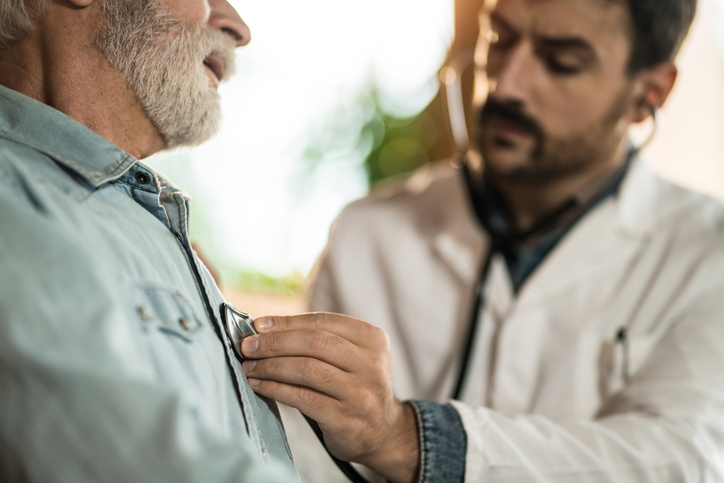
What Is Catheter Ablation for Cardiac Arrhythmias?
Catheter ablation is a treatment that helps correct an irregular heartbeat, also called an arrhythmia. Your heart beats by following electrical signals that tell it when to squeeze and relax. When those signals misfire or follow the wrong path, your heartbeat can become too fast, too slow, or uneven. Catheter ablation helps to stop that from happening.
What to Know About Your Catheter Ablation
Here’s what you should know before, during, and after your procedure.
How to Prepare
- Do not eat or drink anything after midnight before your procedure.
- Wear comfortable clothes.
- Follow your provider’s instructions about pausing medications. Some may need to be discontinued several days in advance.
What to Expect During the Catheter Ablation
One of our cardiac electrophysiologists, a cardiologist with advanced and specialized training in heart rhythm disorders, will perform your catheter ablation. Your procedure will likely take between two and four hours:
- You’ll be given medicine to help you relax or sleep during the procedure.
- Your electrophysiologist will place catheters (a thin, flexible tube) into a blood vessel in your leg and/or neck.
- Through your blood vessel, your electrophysiologist will gently guide the catheter into your heart.
- They’ll use imaging and mapping tools to find the spot that’s causing your irregular heartbeat.
- Once spotted, they’ll deliver ablation lesions to stop the problem.
- The catheters are then removed, and the spot where it was placed is cleaned and covered with a bandage.
Heat or Cold: Two Ways to Treat the Problem
Once we find the spot in your heart causing the irregular rhythm, we often use either heat or cold to treat it. Both methods work by gently damaging that small area so it can no longer send out faulty signals.
- Radiofrequency ablation uses heat to correct your tissue.
- Cryoablation uses cold to freeze the problem area.
More recently, another method of ablation, called “pulsed field” ablation (PFA) has been used. This method is faster and safer, especially for ablation of atrial fibrillation. PFA utilizes tiny bursts of electricity to selectively affect heart cells involved in the clinical arrhythmia, with less impact on surrounding tissues.
What to Expect After
You may feel tired or have a sore spot where the catheter was placed, but this usually goes away in a day or two. Most people return to their normal activities within a few days. Your doctor will let you know when it’s safe to exercise or return to work.
You’ll also have a follow-up visit to check your heartbeat. On this same visit, you can discuss whether you need to continue any of your medications.

John Zimmerman
Clinical Cardiac Electrophysiology
Locations:
-
257 Lafayette Ave Suite 330
Suffern, NY 10901
 WMCHealth Provider

Hratch Kazanjian
Cardiovascular Disease
Locations:
-
30 Hatfield Ln
Goshen, NY 10924
WMCHealth Provider
Aneta Dimova
Cardiovascular Disease
Locations:
-
111 Marys Avenue Suite 3
Kingston, NY 12401
WMCHealth Provider

Andrew Shih
Cardiovascular Disease
Locations:
-
257 Lafayette Avenue Suite 200
Suffern, NY 10920
WMCHealth Provider

Sharmila Sarkar
Cardiovascular Disease
Locations:
-
1 Crossfield Avenue Suite 101
West Nyack, NY 10994
WMCHealth Provider

Ahmed Alabbady
Interventional Cardiology
Locations:
-
12 Liberty Square Mall
Stony Point, NY 10980
WMCHealth Provider

Richard Cantor
Cardiovascular Disease
Locations:
-
2 Executive Blvd
Suffern, NY 10901
WMCHealth Provider

Adrienne Rascoe
Cardiovascular Disease
Locations:
-
575 Hudson Valley Avenue Suite 200
New Windsor, NY 12553
WMCHealth Provider
Yoram Amsalem
Interventional Cardiology
Locations:
-
257 Lafayette Ave Suite 300
Suffern, NY 10901
WMCHealth Provider
Dominica Potenza
Cardiovascular Disease
Locations:
-
100 Woods Road ACP 1st Floor
Valhalla, NY 10595
WMCHealth Provider
Gladys Pacenza
Cardiovascular Disease
Locations:
-
575 Hudson Valley Avenue Suite 200
New Windsor, NY 12553
WMCHealth Provider
Shubnum Singh
Cardiovascular Disease
Locations:
-
972 Route 45 Suite 103
Pomona, NY 10970
WMCHealth Provider
Muhammad Raufi
Interventional Cardiology
Locations:
-
575 Hudson Valley Avenue Suite 200
New Windsor, NY 12553
WMCHealth Provider
Daisy Yohannan
Cardiovascular Disease
Locations:
-
100 Woods Road ACP 1st Floor
Valhalla, NY 10595
WMCHealth Provider


Cary Hirsch
Interventional Cardiology
Locations:
-
257 Lafayette Ave Suite 300
Suffern, NY 10901
WMCHealth Provider
Patricia Rainaldi
Cardiovascular Disease
Locations:
-
575 Hudson Valley Avenue Suite 200
New Windsor, NY 12553
WMCHealth Provider
Jiji Abraham
Cardiovascular Disease
Locations:
-
100 Woods Road ACP 1st Floor
Valhalla, NY 10595
WMCHealth Provider

Andrew Najovits
Cardiovascular Disease
Locations:
-
257 Lafayette Ave Suite 300
Suffern, NY 10901
WMCHealth Provider
Why Choose WMCHealth for Catheter Ablation
High-Tech Labs Designed for Heart Rhythm Treatment
When you have an irregular heart rhythm, or arrhythmia, you want answers and treatment you can trust. At WMCHealth, we have high-quality imaging and 3D mapping systems that help us precisely locate the source of your arrhythmia, along with the latest ablation technologies. This means we can treat the source with accuracy and confidence.
Regional Access to Seamless Transfers
Catheter ablation is available at multiple WMCHealth locations across the Hudson Valley. If you need more advanced care, our team coordinates seamless transfers to other cardiac centers within our Network, including Westchester Medical Center, (the flagship of the WMCHealth system) as well as at and Good Samaritan Hospital.