
Message from Program Director
We’re excited you’re considering the Westchester Medical Center Pathology Residency Program. Located in Valhalla, Westchester Medical Center is a 652-bed academic medical center and a major tertiary and quaternary referral hub for more than 2.4 million people across the Hudson Valley. Our diverse patient population and complex case mix provide an outstanding foundation for pathology training.
Our residency is one of the long-standing pathology training programs in the United States, with a strong history of graduating confident, well-prepared pathologists. Whether your career goals include academic pathology, community practice, or subspecialty fellowship training, our program is designed to support you every step of the way.
Training that Prepares you for the Real-World Practice:
Residents in our APCP program receive broad, hands-on training across areas of anatomic and clinical pathology. You’ll work closely with experienced, subspecialty trained faculty who are deeply invested in resident education and mentorship. Progressive responsibility is built into the curriculum, allowing you to grow in independence and confidence as you advance through training.
Our affiliation with New York Medical College further enriches the resident experience. Through this partnership, residents have access to robust teaching opportunities, interdisciplinary collaboration, and mentorship across a wide range of medical and laboratory science disciplines. Many of our residents are actively involved in teaching medical students and benefit from structured guidance in career and professional development.
A Modern, Forward Looking Learning Environment:
We recognize that pathology is evolving, so our program has made significant investments in educational innovation. Residents have access to contemporary electronic learning resources, and whole slide imaging is fully integrated into conferences and teaching sessions. Digital pathology is used routinely, giving residents flexibility in how and when they learn while preparing them for current and future practice environments. Our molecular pathology curriculum continues to expand, with ongoing validation of new molecular genetic pathology assays. This exposure helps residents develop a practical, working understanding of molecular pathology and its growing role in patient care. Access to a large quality data laboratory resources initiative reflects the increasing importance of informatics, digital workflows, and computational tools in pathology. Residents are encouraged to explore these emerging technologies, experiment with new tools, and expand their skill sets beyond traditional diagnostic boundaries.
Scholarship, Collaboration and Community:
Residents at Westchester Medial Center are active participants in research, quality improvement, and patient safety initiatives. Journal clubs, departmental conferences, and collaborative projects foster a culture of curiosity, critical thinking, and continuous improvement. Faculty mentorship supports residents who wish to present at meetings, publish scholarly work, or pursue leadership roles within the specialty.
Above all, our program values collegiality, inclusivity, and resident well-being. We are committed to creating a supportive learning environment where residents feel challenged, respected, and empowered to grow into skilled, thoughtful pathologists.
Research – Pathologist – Scientists (RPS) Track:
Westchester Medical Center, in conjunction with our clinical, translational and basic science investigators, will consider any applicant who wishes to pursue research investigations during the residency. This will be modeled towards submitting an NIH-K08 research application by PGY-2 and enable the resident to spend longer durations in the research laboratory. A mentor group composed of the scientific mentor, program director, chair of PMI, and 1-2 other members will be included to meet and discuss the structure and progress of the RPS resident’s track. RPS residents may still be required to carry out some clinical responsibilities during the research period. The structure will be individualized and may depend on the requirement of the research protocols, preliminary studies envisioned, and the timeline. Please contact the PD/PC for more information.
There is a lot of excitement with change. Our field of pathology is undergoing rapid changes, including ways to train the future pathologist. We embrace change and make available all resources including faculty expertise to make every single trainee a successful pathologist of the future.
We thank you for your interest in Westchester Medical Center.
Sincerely,
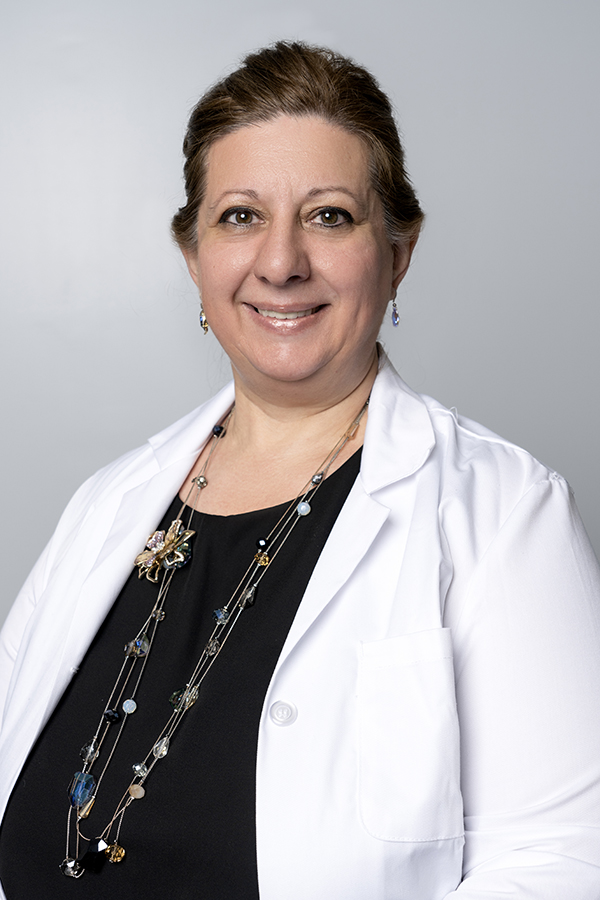
Pathology Residency Program Director
Chief of Clinical Pathology
Laboratory Quality Program Director
Westchester Medical Center
Program Overview
Programs Offered
The Pathology Residency was accredited in 1951 by the ACGME. Our program is accredited for 12 training positions in the combined Anatomic and Clinical Pathology (four-year AP/CP Track), Anatomic Pathology (three-year AP Only Track) or Clinical Pathology (three-year CP Only Track). The combined training track integrates both anatomical and clinical pathologic training throughout all four years. Anatomic pathology training includes surgical pathology, autopsy pathology, hematopathology, renal pathology, neuropathology, cytopathology, cytogenetics, molecular genetics, and forensic pathology. Clinical pathology encompasses clinical chemistry, hematology, transfusion medicine, transplant immunology, flow cytometry, medical microbiology, immunology, serology, laboratory management and informatics.
Types and Numbers of Appointments
Twelve positions are available at the Valhalla Campus: generally, three PGY-1 openings are offered each July. Residents are assigned full-time to Westchester Medical Center. Elective opportunities are available..
Research, scholarly activity and mentorship opportunities
All pathology residents participate in yearly research projects. The projects often lead to poster and platform presentations at national conferences, which residents are encouraged to attend. Expenses related to such conferences are reimbursed for presenters. For residents who wish to gain additional experience in pathology research, the Valhalla campus and the Cancer Research Institute offer the opportunity to participate in several ongoing projects under the direction of a departmental faculty member. The residents have full access to the library facilities of New York Medical College and its online subscriptions. They are invited to monthly meetings of New York Pathological Society and Westchester Pathology Society in addition to daily departmental conferences and certain clinical conferences. The chief residents and qualified senior residents may receive appointments as Instructors in the Medical College and participate in the education of medical students.
Residents PGY 2 and above have dedicated rotation blocks for either research or electives. Research can be in any area of interest in AP or CP.
Scholarly activity is built into the program’s annual academic calendar. Residents, paired with mentoring faculty members, are required to present at the departmental Journal Club each year. They must also complete and present one quality assurance/quality improvement project annually. In addition, residents in PGY 1–3 are required to complete one research project per year.
Residents are strongly encouraged to participate in the Pathology, Microbiology, and Immunology Annual Research Symposium.
Educational & Curriculum Content
How to Apply
We will accept three residents for the 2027-2028 academic year. Please submit applications through ERAS (Electronic Residency Application System).
We review all applications from a holistic point of view considering scores, experiences, personal interests, skills, number of publications, research, etc. Qualified applicants will be identified to be interviewed. We will be conducting virtual interviews via Thalamus.
Application Requirements
- Personal statements
- Curriculum Vitae
- Three Letter of Recommendations (LOR), one of which must be from a pathologist
- Medical School Transcript
- MSPE (Medical School Performance Evaluation) or Dean’s letter
- USMLE 1, USMLE 2 scores, USMLE 3 (preferable)
Important Timelines
- ERAS opens: September 23, 2026
- Candidate Interviews: Varied dates and times, October 2026 through December 2026.
- The program participates in National Residency Match Program (NRMP).
- NRMP Codes: 2157300C0_Pathology (Categorical)
- Match Day: May 19, 2027
- Residency start date: July 1, 2027 (orientation scheduled end of June 2027)
- Visa sponsorship: Westchester Medical center will sponsor J-1 visa.
Contact Us
Macy Pavilion, 1416│100 Woods Road | Valhalla, NY 10595
(O) 914.493.5289 │(F) 914.493.574
Jennifer Trinidad
Program Manager
Faculty
- Ljiljana V. Vasovic, MD
Program Director
Chief of Clinical Pathology
Laboratory Quality Program Director
Program Evaluation Committee Member
Attending Pathologist
Medical School: School of Medicine, University of Belgrade, Serbia
Residency: Anatomic and Clinical Pathology, Lenox Hill Hospital, New York University, NY
Fellowship: Hematopathology Fellowship, Albert Einstein College of Medicine, NY
Transfusion Medicine, Harvard Medical School, Boston, MA - Fouzia A. Shakil, MD, PhD
Program Ombudsman,
Clinical Competency Committee Member,
Program Evaluation Committee Member,
Director of Surgical Pathology
Medical School: Sir Salimullah Medical College, Bangladesh
Residency: Oregon Health and Science University, Portland, OR
Fellowship: Surgical Pathology – Oregon Health and Science University, Portland, OR
Hematopathology – Vanderbilt University Medical Center, Nashville, TN - Humayun Kamal Islam, MD, PhD
Chairman, Clinical Professor, Pathology, Microbiology and Immunology
Clinical Associate Professor of Medicine, New York Medical College
Director, Department of Pathology & Lab Medicine, Westchester Medical CenterMedical School: Dhaka Medical School
Residency: New York Medical College
Fellowship: Hematopathology – New York University Medical Center
- Vishnu Chaturvedi, PhD
Chief, Microbiology, Virology and Molecular BiologyGraduate School: Vallabhbhai Patel Chest Institute, University of Delhi, Delhi, India
Post-doctoral Training: University of Cincinnati School of Medicine, Texas Tech University Health Sciences Center (TTUHSC) School of Medicine - Liying Han, MD, PhD
Director of Cytology Service,
Chief of Anatomic Pathology
Clinical Competency Committee Member,
Attending Pathologist
Medical School: Fourth Military Medical University
Residency: North Shore University Hospital
Fellowship: Cytopathology – Wayne State University
- Sadiqa Karim, MD
Director of Transfusion Medicine,
Program Evaluation Committee Chair,
Clinical Competency Committee Member
Medical School: Sindh Medical College, Karachi, Pakistan
Residency: Baystate Medical Center, Springfield, MA
Fellowship: Blood Banking / Transfusion Medicine – Baystate Medical Center, Springfield, MA
- Chitra Kumar, BSc, BEd, MSc, PhD
Director, Cytogenetics Laboratory
Assistant Professor of PathologyGraduate School: Patna University, India
Fellowships: Patna University, India Mount Sinai School of Medicine, NY
- George M. Kleinman, MD
Autopsy Service Director,
Clinical Competency Committee Member,
Neuropathologist
Medical School: State University of New York at Buffalo
Residency: Massachusetts General Hospital
Fellowship: New England Medical Center
- Patrick A. Lento, MD
Cardiac Pathologist
Medical School: Georgetown University School of Medicine
Residency and Fellowship: Mount Sinai Medical Center, New York
- Anas Othman Issa Mohamed, MD
Attending Pathologist
Medical School: Omar Al-Mukhtar University Faculty of Medicine, Libya
Residency: ECU Health Medical Center, Greenville, NC
Fellowship: Women’s Health Pathology, Montefiore Medical Center, NY - Kotero Takeda, MD
Attending Pathologist, Associate Program Director Medical Education: Shimane Medical University
Residency: St. Mary’s Hospital, Karume – Internal Medicine East Carolina University Pathology program, Greenville, NC – Pathology- Anatomic & Clinical
Fellowship: Kyushu Hospital, Kitakyushu City Yale School of Medicine – Pathology Department, New Haven, CT – Cytopathology Fellowship
- Xiaoyu Tang, MD, PhD
Attending Pathologist Medical School: China Medical University
Residency: Penn State Health Hershey Medical Center, Hershey, PA
Fellowship: Breast Pathology- Albany Medical Center, Albany, NY,
Cytopathology – Geisinger Medical Center, Danville, PA
- Yijun Zhu, MD
Medical School: Tongji Medical College of Huazhong University of Science & Technology
Residency: Clinical pathology at Feinberg Scholl of Medicine, Northwestern University
Fellowship: Transfusion Medicine, University of Chicago, IL
Hematopathology, University of Illinois at Chicago, IL - Jayalakshmi Venkateswaran, MD
Attending PathologistMedical Education: Dr. Panjabrao Deshmukh Memorial Medical College, India
Residency: Danbury Hospital, Danbury, CT
Fellowship: Oncologic Surgical Pathology, Memorial Sloan Kettering Cancer Center, New York, NY
Hematopathology, Memorial Sloan Kettering Cancer Center, New York, NY - Anupma Agarwal, MD
Attending Pathologist Medical Education: Lady Hardinge Medical College, New Delhi, Delhi
Internship: Lady Hardinge Medical College (W12020), New Delhi, Delhi
Rotating Internship – Medicine, Surgery, OBGYN, Pediatrics, ENT, Eye, Skin and VD, Orthopedics, Radi
Residency: Staten Island University Hospital, Staten Island, NY – Pathology – AP / CP
Maulana Azad Medical College, New Delhi, Delhi
Fellowship: Biochemistry Fellowship, North Shore University Hospital and Long Island Jewish Medical Center (NS/LIJ Northwell), Greenvale, NY – Cytopathology - Ewa Borys, MD
Associate Professor of Pathology Medical Education: Wroclaw Medical University, Wroclaw
Internship: Wroclaw Medical University, Wroclaw
Residency: University of Illinois Chicago, Chicago, IL – Anatomic and Clinical Pathology
Wroclaw Medical University, Wroclaw – Diagnostic Radiology
Fellowship: University of California Davis, Sacramento, CA – Surgical Pathology
University of California Davis School of Medicine, Sacramento, CA – Neuro and Surgical Pathology - Muhammad O. Hakim, MBBS
Attending Pathologist Medical Education: Aga Khan Medical College, Karachi
Residency: Queens University/ University of Toronto, Kingston – Orthopedic Surgery (partial)
Western University, London, ON – Anatomical Pathology
Fellowship: Miller School of Medicine, Miami, FL – Bone and Soft Tissue Pathology
University of Miami-Jackson Memorial Hospital, Miami, FL – Head and Neck Pathology - Aaron Yancoskie, DDS
Attending PathologistDental School: New York University
Residency: North Shore University Hospital at Long Island Jewish Medical Center - Angelica Mares, MD
Cytopathology Attending - Donna Hill, DO
Associate Director of Clinical Pathology - Humayun Islam, MD, PhD
Chair, Pathology Department, Hematopathologist
Current Residents
- SM Shafiqul Alam, MD – Dhaka Medical College, Bangladesh
- Vidhi Shah, MBBS, MD – B.J. Medical College, India
-
Mala Jain, MD – Government Medical College Surat
- Harjot Mann, DO – Michigan State University College of Osteopathic Medicine
- Elena Metrikova, MD – First Moscow State Medical University named after I. M. Sechenov
- Haiyan Qiu, MD, PhD – Qingdao University College of Medical Science
- Tasleem Banu, MD – Kamineni Institute of Medical Sciences
- Manel Bouchama, MD – University of Algiers Faculty of Medical Science- Algier -Algeria
- Manisha Regmi, MD – Manipal College of Medical Sciences (MCOMS), Nepal
- Sayed Shahabuddin Hoseini, MD, PhD – Tehran University of Medical Sciences, Iran
- Kuaybe Karakus Gulen, MD – Uludag Universitesi Tip Fakultesi, Turkey
- Garrett Smith, MD, PhD – University of Florida College of Medicine, USA
Past Residents
- Sayed Shabuddin Hoseini, MD, PhD- Tehran University of Medical Sciences Fellowship: Hematopathology Fellowship at Weill Cornell Medicine/NewYork-Presbyterian Hospital
- Kuaybe Karakus, MD- Uludag Universitesi Tip Fakultesi, Turkey Fellowship: Women’s Health Fellowship Northwell Health
- Garrett Smith, MD, PhD- University of Florida College of Medicine, USA Fellowship: Fellowship in Forensic Pathology at the Miami-Dade County Medical Examiner’s Office
- Priti Chamdal, MD – Medical University of Lublin, Poland
Fellowship: Cytopathology Fellowship, UC Irvine School of Medicine - Nao Odajima Hara, MD, PhD – Asahikawa Medical University
Fellowship: Cardiothoracic Pathology Fellowship, University of Michigan
- Mohamed Elnagdy, MBBC – University of Cairo, Faculty of Medicine, Egypt, Fellowship: Neuropathology Fellowship, MD Anderson, Houston, TX
- Sravanthi Lavu, MBBS – Andhra Medical College, India, Fellowship: Molecular Fellowship, MD Anderson, Houston, TX
- Lakshmisree Akhila Vemulakonda, MBBS – Katuri Medical College, Guntur, India, Fellowship: Gastrointestinal Pathology Fellowship, University of Washington, Seattle, WA
- Soumya Mikkilineni, MD – Dr. NTR University of Health Sciences, India, Hematopathology Fellowship in Thomas Jefferson University, Philadelphia, PA, Attending, University of Missouri
- Mozibur Rahman, MD, MPH, PhD – Dhaka Medical College, Fellowship: Gastrointestinal Pathology Fellowship, Northwell Health, NY
- Helena Tomac Pavosevic, MD – University of Zagreb School of Medicine, Croatia, Fellowship: Gastrointestinal and General Surgical Pathology, Columbia University, NY
- Sidra Zaheer, MD – Dow Medical College, Pakistan, Fellowship: Hematopathology Fellowship, New York University, NY, Molecular Pathology Fellowship, Columbia University, NY
- Haiyan Li, MD – Peking University Health Science Center, China, Fellowship: Oncologic Surgical Pathology, Roswell Park Comprehensive Cancer Center, Buffalo, NY
- Marcelo Cassini, MD, PhD, Chief Resident 2020-2021 – Universidade Federal Fluminense, Rio de Janeiro, Brazil, Fellowship: Cardio-Pulmonary Pathology at NYU (New York University), Assistant Professor, Department of Pathology at The Robert Larner M.D. College of Medicine, University of Vermont
- Kemin Xu, MD, PhD – Jiangxi Medical College JiangXi, China, Fellowship: Hematopathology, New York University (NYU), Fellowship: Molecular Genetics, Cornell University
- Qiqi Ye, MD, PhD, Chief Resident 2020-202 – Fudan University, China, Fellowship: Breast Pathology, MD Anderson, Houston, TX
- Rugved Pattarkine, MD, Chief Resident 2019-2020 – Smolensk state medical academy, Smolensk, Russia, Fellowship: Transfusion Medicine, David Geffen School of medicine at UCLA (University of California Los Angeles)
- Sarwat Gilani, MD, Chief Resident 2019-2020 – Foundation University Medical College (FUMC)
- Dana Marie Razzano, MD – St. George’s University School of Medicine
- Shamima Sultana, MD, PhD – Dhaka National Medical College & Hospital
- Alexandra Budhai, MD – Ross University School of Medicine
- Christian Salib, MD – St. George’s University School of Medicine
- Sina Zomorrodian, DO – Touro College of Osteopathic Medicine
- Taliya Farooq, MBBS – Allama Iqbal Medical College
- Faisal Saeed, MBBS – King Edward Medical University
- Galam Khan, MD – Sher-E-Bangla Medical College
- Eric Vail, MD – St. George’s University School of Medicine, Fellowship: Molecular Pathology, Cedars-Sinai Medical Center, Molecular Pathology, Cedars-Sinai Medical Center
- Esther Yoon, MD – St. George’s University School of Medicine, Fellowship: Women’s Pathology, NYU Langone Health
- Sabina Hajiyeva, MD – Azerbaijan State Medical University
- Faisal Huq Ronny, MD – Dhaka Medical College, Fellowship: Hematopathology, NYU Langone Health
- Pallavi Khattar, MD – Bharati Vidyapeeth Medical College, Pune, Fellowship: Hematopathology, Memorial Sloan Kettering Cancer Center Surgical Pathology, Memorial Sloan Kettering Cancer Center
- Maheen Hossain, MD – University of Dhaka, Fellowship: Surgical Pathology – Long Island Jewish Medical Center (2015)
- Boaz Kurtis, MD – Sackler School of Medicine, Fellowship: Molecular Genetic Pathology – Columbia University (2015), Dermatopathology – Cockerell University (2016)
- Kashan Khalid, MD – Khyber Medical College, Fellowship: Surgical Pathology – Staten Island University (2015)
- Xiaoyong Zheng, MD – Third Military Medical University
Our Clinical Locations
Westchester Medical Center
Westchester Medical Center shares its leafy campus with New York Medical College in Valhalla, NY, approximately 20 miles north of New York City. It is a Level 1 Trauma and Burn Center and a major hub for specialized care referrals. Here, we take care of patients from a very large catchment area stretching from the northern border of New York City to the Catskill Mountains.
Westchester Medical Center has a pediatric hospital (Maria Fareri Children’s Hospital) with eight dedicated pediatric operating rooms as well as many other non-operating room anesthetizing sites, including MRI, radiation and nuclear medicine, and endoscopy. The Ambulatory Care Pavilion, which opened in July 2019, added many anesthetizing locations, both OR and Non-OR.
Construction is underway on the 128-bed state-of-the-art Critical Care Tower, a $220 million project that when completed will span 162,000 square feet over five floors. Our caseload includes a full profile of cardiac, interventional pulmonary and thoracic, complex orthopedic, neurosurgical and solid organ transplant interventions, to name the busiest services. We have a large heart failure and ECMO referral program. Trauma orthopedics and surgery provide our residents a great variety of “open” cases. Residents participate in minimally invasive and robotic interventions in gynecologic-oncology, urology, colorectal, endocrine and thoracic surgery, as well as complex cardiac and neurological endovascular interventions, both pediatric and adult. The Acute and Chronic Pain Management care rotations cover both the pediatric and adult inpatients and outpatients, including complex consultations for patients in the Burn ICU.