
Welcome to WMCHealth Urology Residency Program
Message from Program Director
On behalf of the faculty of the Department of Urology of New York Medical College/Westchester Medical Center, we welcome you to learn about our department, its goals, and its missions for education and training.
The match process is certainly one that generates anticipation about beginning such a career, but we also understand that the match process, its interviews, and commitments are also associated with considerable expense and anxiety. Our goal as faculty and mentors is to provide you with the support, guidance, and information required to make the most of your experience in a fulfilling, healthy, and enjoyable learning environment. We aim to train conscientious and skilled surgeons in a demanding and challenging field.
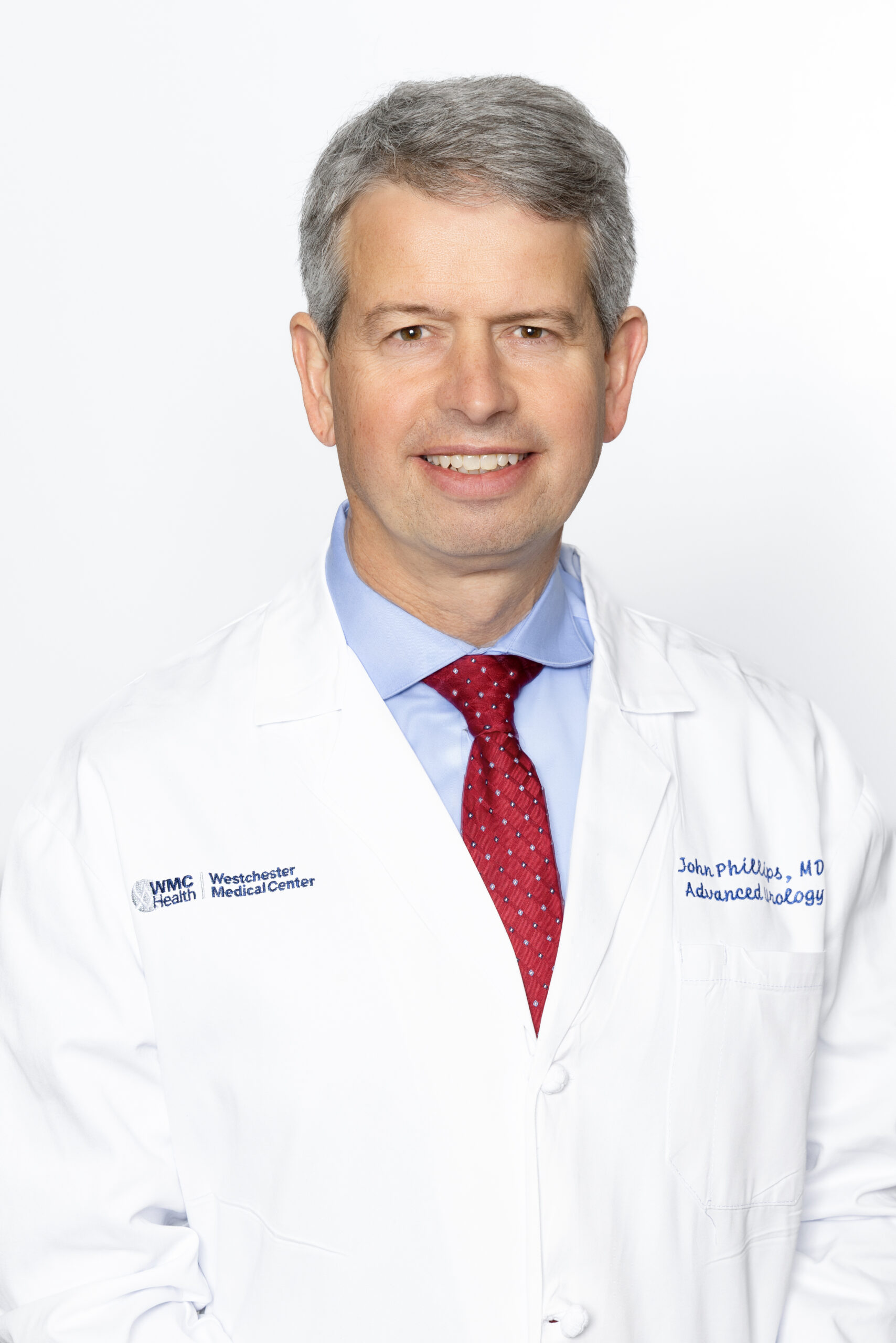
John L. Phillips, MD, FACS
Urology Residency Program Director
Professor Department of Urology
New York Medical College
19 Skyline Drive 1S-B45a
Phone: 914.493.7684 or 914.594.2440
Fax: 914.594.2431
Email: [email protected]
Program Overview
The Urology Residency Training Program at Westchester Medical Center is a structured five-year post graduate curriculum designed to produce a practitioner of the highest caliber who espouses the professionalism, rigor, and tenets of the ideal physician in the urologic domain, promoting excellence in their health care environment, in the field of urology, and in their community. The program accepts two residents a year through the American Urological Association (AUA) match who have fulfilled all the necessary medical school requirements leading to the achievement of a Medical Degree (MD) or Doctor of Osteopathy (DO). The sponsoring site of the program is Westchester Medical Center and two additional “participating” sites: Metropolitan Hospital Center (MHC) and Lincoln Medical Center (LMC), which provide unique learning experiences.
Each rotation is designed to occur at specific points along the educational pathway and provide surgical training consummate with certain residency years. All rotations are designed so that a junior and senior resident are assigned together in rotations to ensure each has a unique role, exposure, and experience at each site. Rotations on the Urology service are typically three months in duration. Publication is strongly encouraged. Support is provided to the residents for attendance at the national meeting of the AUA when a resident’s abstract is accepted for presentation at the meeting or other domestic meeting of the resident’s choice.
The Program is fully accredited by the ACGME. Resident feedback, input, and design are solicited to optimize the residency educational training environment. Four one-week vacations are provided each year. Benefits are provided through Westchester Medical Center.
Why Westchester?
At Westchester Medical Center, residents train in a high-volume academic environment while benefiting from the mentorship and individualized attention of a close-knit program.
By the Numbers
- 100% American Board of Urology board pass rate over the past 25 years
- 10 fellowship placements over the past decade
- 4 clinical training sites
- 10 residents
- 8 fellowship-trained faculty
- More than 10,000 annual patient visits
- Dedicated research rotations
Comprehensive Surgical Training
Residents gain extensive experience in robotic surgery, urologic oncology, endourology, reconstructive urology, pediatric urology, female pelvic medicine, men’s health, and infertility.
As a tertiary referral center, Westchester Medical Center provides exposure to complex stone disease, advanced malignancies, challenging reconstructive cases, and multidisciplinary care. Residents receive training in both prone and supine percutaneous nephrolithotomy (PCNL), advanced endourology, robotic surgery, and open surgical techniques.
A Program Built Around Mentorship
Our size is one of our greatest strengths. Residents work directly with faculty on a daily basis and receive individualized coaching in the operating room, clinic, research, and career development. Faculty know their residents personally and remain invested in their success long after graduation.
Preparing the Next Generation of Urologists
Whether pursuing fellowship training, academic medicine, or private practice, our graduates leave with the clinical judgment, technical skills, and confidence necessary for independent practice.
- Participate in safe, compassionate, and cost-effective patient care under a level of supervision commensurate with their achieved cognitive and procedural skills
- Participate fully in the educational activities of their program and, as required, assume responsibility for teaching and supervising other residents and students
- Fulfill the educational requirements of the training program established by the American Board of Urology (ABU) to become candidates for the ABU certifying exam.
- Demonstrate specific urology knowledge, skills and attitudes, including:
- Patient and family-centered care that is compassionate, appropriate, and effective for the treatment of health problems and the promotion of health.
- Medical knowledge about established and evolving biomedical, clinical, and cognate (e.g., epidemiological and social-behavioral) sciences and the application of this knowledge to patient care.
- Practice-based learning and improvement that involves investigation and evaluation of their own patient care, appraisal and assimilation of scientific evidence, and improvements in patient care.
- Interpersonal and communication skills that result in effective information exchange and teaming with patients, their families, and other health professionals.
- Professionalism, as manifested through a commitment to carrying out professional responsibilities, adherence to ethical principles, and sensitivity to a diverse patient population.
- Systems-based practice, as manifested by actions that demonstrate an awareness of and responsiveness to the larger context and system for health care and the ability to effectively call on system resources to provide care that is of optimal value.
- Participate in institutional programs and activities involving physicians, and adhere to applicable laws, regulations, rules, policies, procedures and established practices of the sponsoring institution and all other institutions to which they are assigned.
- Participate in institutional committees and councils, especially those related to patient care review activities and residency education.
- Learn and apply reasonable cost-containment measures in the provision of patient care.
Program Curriculum
How to Apply
The prospective applicant must submit the following via ERAS: AMC – ERAS
- Application
- United States Medical Licensing Examination (USMLE) certification
- Three Letters of Recommendations
- Medical Score Grades – Transcripts Personal Statement
- Medical School Performance Evaluation (MSPE)
- Program Requirements
- USMLE test scores for USMLE Step 1 and 2 for consideration of interview is:
- Step 1: Pass the first attempt.
- Step 2: Must Pass Step 2 at graduation from Medical School. The passing of each step of USMLE should be done on the first attempt.
- Research experience is helpful and considered important.
- The candidate must possess strong motivation and commitment to Urology as evidenced by background education, personal statement, and letters of recommendation.
- The candidate must have personality traits such as emotional maturity, warmth, and compassion as well as good communication skills.
Current Residents
-
Talia Saal, MD – New York Medical College
-
Matthew Veale, MD – New York Medical College
-
Andrew Polis, MD – NYU Grossman Long Island School of Medicine
-
Aaron Walt, MD – SUNY Downstate Medical Center College of Medicine
-
Judith Stangl-Kremser, MD – Medizinische Universität Innsbruck
-
Ryan Lubarsky, MD – New York Medical College
-
Kevin Alter, MD – Rush Medical College of Rush University
-
Grigori Vaserman, MD – New York Medical College
-
Daniel Bassily, MD – New York Medical College
-
Charles White, MD – New York Medical College
- Tzach Aviv, MD – Endourology (NST) Fellow
Urology Faculty
- John Phillips MD Program Director and Professor and Chair of Urology
- Daniel Rosen MD Associate Program Director and Assistant Professor
- Muhammad Choudhury MD Professor
- Abdolmajid Eshghi MD Professor
- Gerald Matthews MD Clinical Associate Professor
- Denton Allman MD Clinical Assistant Professor
- Sean Fullerton MD Assistant Professor
- David Schwalb MD Clinical Associate Professor
- Lori Dyer MD Clinical Associate Professor
- Paul Zelkovic MD Clinical Associate Professor
- Sensuke Sato (Konno) PhD Research Professor
- Richard Schlussel MD Clinical Assistant Professor
- Jean Lajeune MD Clinical Assistant Professor
- Raphel Novogrodsky MD Clinical Assistant Professor
- Andrew Fishman MD Clinical Assistant Professor
- Siri Drangsholt MD Assistant Professor
- Michael Shy MD, PhD Assistant professor
- Andrew Katims MD Assistant Professor
- Jason Elyaguov MD Assistant Professor
Program Alumni
- The program has had a 100 percent board pass rate since 2002 producing 27 of 27 residents who became board-certified by the American Board of Urology (ABU). Of the 27 residents, 13 have had additional training in fellowships. Since the graduating class of 2000, residents have practiced in 14 states including: California (7); Colorado (1); Connecticut (1); Illinois (2); Massachusetts (1); Minnesota (1); Nevada (1); New Jersey (4); New York (11); Pennsylvania (2); North Carolina (1); South Carolina (1); Texas (2); Utah (1).
- 2022-2025
- National Cancer Institute
- City of Hope Cancer Care
- Hackensack Meridian Health
- University of Southern California
- Swedish Health Services
- Cedars-Sinai Medical Center
- David Ambinder, MD
- Evan Spencer, MD
- Eitan Glucksman, MD
- Vincent Wong, MD
- Akhil Saji, MD
- Rogerio Huang, MD
- Ashley Dixon, MD
- Jason Elyaguov, MD
- Feng Guo, MD
- Nikhil Gopal, MD
- Sameh Naim, MD (Endourology Fellow)
- Dr. Michael Stern
- Dr. Michael Zhang
- Dr. Cristina Fox
- Dr. Neel Patel
- Dr. Joel Hillelsohn
- Dr. Roger Yau
- Dr. Jonathan Bloom
- Dr. Mark Ferretti
- Dr. Amul Bhalodi
- Dr. Vladimir Valera Romero
- Dr. Dawud Lankford
- Dr. Eric Moskowitz
- Dr. Derek Prabharasuth
- Dr. Drew Freilich
- Dr. Erin Grantham
- Dr. Bobby Alexander
- Dr. Andrew Fishman
- Dr. Alexandria Lynch
- Dr. Emad Rizkala
- Dr. David Green
- Dr. Cathy Alonzo
- Dr. Srinivas Rajamahanty
- Dr. Brandon Louie
- Dr. Paul Pyo
- Dr. Michael Hoffman
- Dr. Mauricio Davalos
- Dr. Paul Grewall
- Dr. Robert Simon
- Dr. Weiwei Xu
- Dr. Keith Tracy
- Dr. Lori Landau Dyer
- Dr. Gary Blake Johnson
- Dr. Shahrad Aynehchi
- Dr. Vance Moss
- Dr. Daniele Dolin
- Dr. Alexander (Alec) Schwartz
- Dr. Janaka (John) Hettiarachchi
- Dr. Sophia Drinis
- Dr. Dean Tortorelis
- Dr. Michael Finkelstein
- Dr. Farshad Nowzari
- Dr. Albert Samadi
- Dr. Sean Fullerton
- Dr. Dan Milanesa
- Dr. John Won
- Dr. Scott Davidson
- Dr. John Chapman
- Dr. Antoinette Berkeley
- Dr. James Cherry
- Dr. Steve Gallo
- Dr. John Mordente
- Dr. Eric Darby
- Dr. Suelyn Hall
- Dr. Louis Faiella, III
- Dr. Melanie Amster
- Dr. Timothy Schneidau
- Dr. Mark Kolligian
- Dr. Barry Lifson
- Dr. Timothy Averch
- Dr. Louis D’Agostino
- Dr. Timothy Duffin
- Dr. Nick Stroumbakis
- Dr. Bennett Scaglia
- Dr. Mariano Tolentino
- Dr. Mark Christ
- Dr. Kathleen Latino
- Dr. Daniel Melamed
- Dr. Jeffrey Proctor
- Dr. Mitchell Efros
- Dr. Thomas Spears
- Dr. Joseph Camilleri, Jr.
- Dr. Emilio Lastarria
- Dr. Joel Fischer
- Dr. James Cord
- Dr. Richard Evans
- Dr. David Schwalb
- Dr. Howard Goldberg
- Dr. Gene Braga
- Dr. Israel Franco
- Dr. Anthony Fiore, Jr.
- Dr. Andrew Simon
- Dr. Jack Bruder
- Dr. Jose Hernandez
- Dr. Michael Budin
- Dr. William Tuong
- Dr. Anthony Arciola
- Dr. Lawrence Sigler
- Dr. Ashok Bhalodi
- Dr. Bruce Houman
- Dr. Hany Oghia
- Dr. Robert Calciano
- Dr. Naeem Samad
- Dr. Nabil Sayegh
- Dr. Sobhy Shehata
- Dr. Bharat Shah
- Dr. Alexander Bernath
- Dr. Nayel Sayegh
- Dr. Ramarao Denduluri
- Dr. Parikshit Pandya
- Dr. Leonard Silber
- Dr. Barry Sonkin
- Dr. Varon Alexander Garcias
- Dr. Stanley Hartanowitz
- Dr. Muhammad Choudhury
- Dr. David Nachamie
- Dr. George Klafter
- Dr. Mark Vine
- Dr. Bechara Tabet
- Dr. Naeem Pervaiz
- Dr. Francisco Recalde
- Dr. Robert Berson
- Dr. Farsaii Asghar
- Dr. Iradj Ansari
- Dr. Steven Katz
- Dr. Louis Gennarelli
- Dr. Peter Albert
- Dr. Donald Rudick
- Dr. Sheldon Kappor
- Dr. Dennis Nugent
- Dr. Elliot Louis Cohen
- Dr. Paul Ziegler
- Dr. Sheldon Rosenthal
- Dr. Martin Reichgut
- Dr. Oscar DeLaPaz
- Dr. Donald Balaban
- Dr. Peter Livingston
- Dr. Jack Vitenson
- Dr. Ira Raff
- Dr. Raymond Craven
- Dr. Noriyoshi Miyazaki
- Dr. David Minninberg
- Dr. Julio Castellanos
- Dr. Mark St. Pierre
- Dr. Nader Sadoughi
- Dr. Robert Green
- Dr. Joseph Rapuano
- Dr. James Stewart
- Dr. Allesandro Colalillo
- Dr. Joseph Karp
- Dr. Stuart Kass
- Dr. Aldo Mazzarino
- Dr. Joseph Addonizio
- Dr. Noriyoshi Miyazaki
- Dr. Camille Mallouh
- Dr. Terence Fitzpatrick
- Dr. Roberto Lopez-Mendoza
- Dr. Lester Felton
- Dr. David Argiriou
- Dr. Lowell Kane
- Dr. Vincent Palumbo
- Dr. Paul Tucci
- Dr. German Bouchard
- Dr. Joseph Andronaco
- Dr. Harry Bergan
- Dr. Frances Beneventi
- Dr. Samuel Wilkins
- Dr. Jesse Hymes
- Dr. Alfred Goldfarb
- Dr. Jesse Keshin
- Dr. Richard Paneblanco
- Dr. George Nagamatsu
- Dr. David Lieberman
Our Clinical Locations
Westchester Medical Center
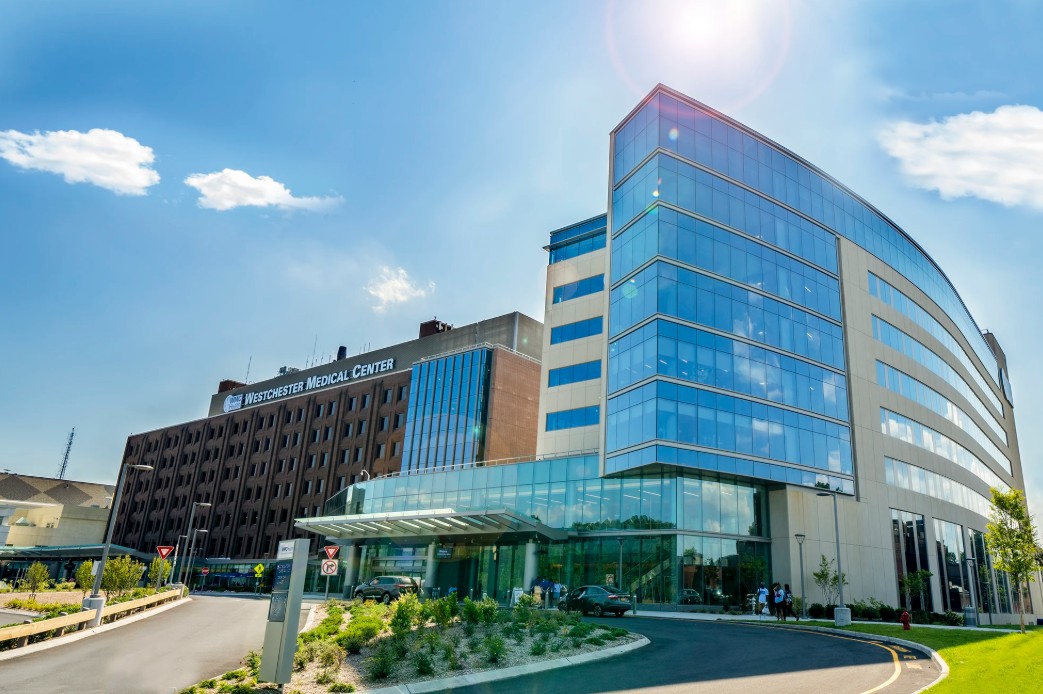
Westchester Medical Center shares its leafy campus with New York Medical College in Valhalla, NY, approximately 20 miles north of New York City. It is a Level 1 Trauma and Burn Center and a major hub for specialized care referrals. Here, we take care of patients from a very large catchment area stretching from the northern border of New York City to the Catskill Mountains.
WMC has a pediatric hospital (Maria Fareri Children’s Hospital) with eight dedicated pediatric operating rooms as well as many other non-operating room anesthetizing sites, including MRI, radiation and nuclear medicine, and endoscopy. The Ambulatory Care Pavilion, which opened in July 2019, added many anesthetizing locations, both OR and Non-OR.
Construction is underway on the 128-bed state-of-the-art WMC Critical Care Tower, a $220 million project that when completed will span 162,000 square feet over five floors. Our caseload includes a full profile of cardiac, interventional pulmonary and thoracic, complex orthopedic, neurosurgical and solid organ transplant interventions, to name the busiest services. We have a large heart failure and ECMO referral program. Trauma orthopedics and surgery provide our residents a great variety of “open” cases. Residents participate in minimally invasive and robotic interventions in gynecologic-oncology, urology, colorectal, endocrine and thoracic surgery, as well as complex cardiac and neurological endovascular interventions, both pediatric and adult. The Acute and Chronic Pain Management care rotations cover both the pediatric and adult inpatients and outpatients, including complex consultations for patients in the Burn ICU.