
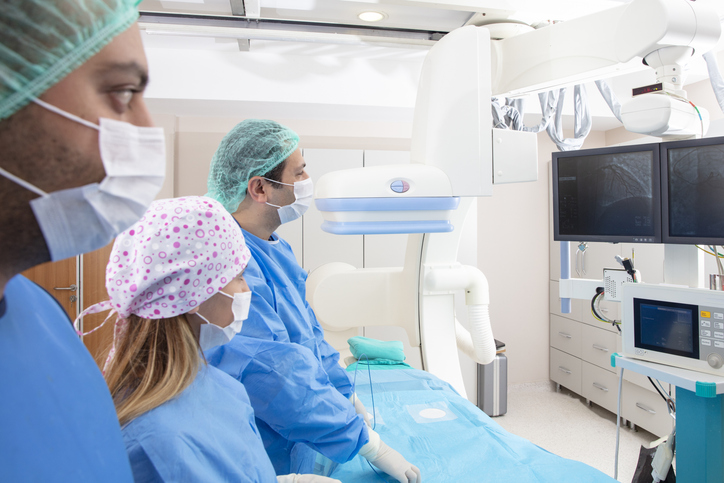
Chest pain and shortness of breath are amongst symptoms that can signal coronary artery disease, which affects more than 20 million U.S. adults. A coronary angiogram can help determine if coronary artery disease is causing your symptoms. This minimally invasive test shows whether your coronary arteries are blocked or narrowed, informing the next steps for your heart care.
At Westchester Medical Center, the flagship of the Westchester Medical Center Health Network, our heart specialists perform thousands of angiograms every year. From advanced technology to collaborative expertise, we provide effective diagnostics with compassion and precision.

What Is a Coronary Angiogram?
A coronary angiogram is a specialized X-ray exam that allows doctors to see the blood flow through your coronary arteries.
It is used to detect blockages or narrowing in the arteries that supply blood to your heart. Your cardiologist may recommend this test if you have symptoms of coronary artery disease, abnormal stress test results, or as a follow-up after a heart event. A coronary angiogram can also help diagnose conditions such as coronary artery disease, angina, and increased heart attack risk.
What to Know About Your Coronary Angiogram
Here’s what to expect before, during, and after your coronary angiogram.
How to Prepare
Your provider will recommend any medications you should stop or adjust prior to your coronary angiogram, and the nurses in the cardiac catheterization laboratory will also call you the night before to discuss arrival time and medications. Otherwise, general steps to prepare include:
- Do not eat or drink for at least six hours before the test.
- Wear comfortable clothing and leave jewelry at home.
- Avoid lotions, perfumes, or oils on your chest or arms the day of the test.
What to Expect During the Coronary Angiogram
A coronary angiogram is typically done in a cardiac catheterization lab by one of our interventional cardiologists. You may receive a sedative to help you relax. The test usually takes about 30 to 60 minutes:
- Your interventional cardiologist will apply a local anesthetic around the area where the catheter will be inserted (usually the wrist or groin).
- The cardiologist inserts a thin tube (catheter) and threads it through your blood vessels to the coronary arteries.
- A contrast dye is injected to highlight your arteries on X-ray images.
The images are reviewed in real time to identify any blockages.
What to Expect Afterwards
Following your coronary angiogram, you may experience mild soreness or bruising at the insertion site. You’ll stay in a recovery area for monitoring, usually for a few hours. Most patients go home the same day.
Your provider will discuss the results with you and any potential next steps, if needed. This may include a treatment plan focused on lifestyle changes, medications, or an interventional treatment. Your provider will also discuss any needed follow-up care, including visits with your cardiologist or a cardiac rehabilitation program.

John Zimmerman
Clinical Cardiac Electrophysiology
Locations:
-
257 Lafayette Ave Suite 330
Suffern, NY 10901
 WMCHealth Provider

Hratch Kazanjian
Cardiovascular Disease
Locations:
-
30 Hatfield Ln
Goshen, NY 10924
WMCHealth Provider

Aneta Dimova
Cardiovascular Disease
Locations:
-
111 Marys Avenue Suite 3
Kingston, NY 12401
WMCHealth Provider

Andrew Shih
Cardiovascular Disease
Locations:
-
257 Lafayette Avenue Suite 200
Suffern, NY 10920
WMCHealth Provider

Sharmila Sarkar
Cardiovascular Disease
Locations:
-
1 Crossfield Avenue Suite 101
West Nyack, NY 10994
WMCHealth Provider

Ahmed Alabbady
Interventional Cardiology
Locations:
-
12 Liberty Square Mall
Stony Point, NY 10980
WMCHealth Provider

Richard Cantor
Cardiovascular Disease
Locations:
-
2 Executive Blvd
Suffern, NY 10901
WMCHealth Provider

Adrienne Rascoe
Cardiovascular Disease
Locations:
-
575 Hudson Valley Avenue Suite 200
New Windsor, NY 12553
WMCHealth Provider

Dominica Potenza
Cardiovascular Disease
Locations:
-
100 Woods Road ACP 1st Floor
Valhalla, NY 10595
WMCHealth Provider
Gladys Pacenza
Cardiovascular Disease
Locations:
-
575 Hudson Valley Avenue Suite 200
New Windsor, NY 12553
WMCHealth Provider
Shubnum Singh
Cardiovascular Disease
Locations:
-
972 Route 45 Suite 103
Pomona, NY 10970
WMCHealth Provider
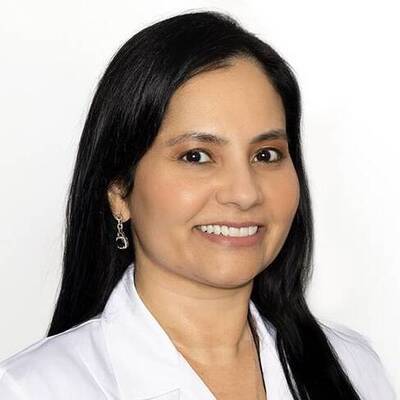
Jiji Abraham
Cardiovascular Disease
Locations:
-
100 Woods Road ACP 1st Floor
Valhalla, NY 10595
WMCHealth Provider
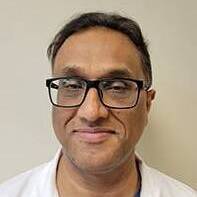
Muhammad Raufi
Interventional Cardiology
Locations:
-
575 Hudson Valley Avenue Suite 200
New Windsor, NY 12553
WMCHealth Provider
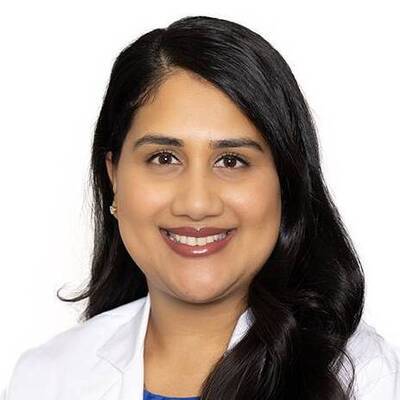
Daisy Yohannan
Cardiovascular Disease
Locations:
-
100 Woods Road ACP 1st Floor
Valhalla, NY 10595
WMCHealth Provider

Cary Hirsch
Interventional Cardiology
Locations:
-
257 Lafayette Ave Suite 300
Suffern, NY 10901
WMCHealth Provider

Patricia Rainaldi
Cardiovascular Disease
Locations:
-
575 Hudson Valley Avenue Suite 200
New Windsor, NY 12553
WMCHealth Provider

Savalan Babapoor
Clinical Cardiac Electrophysiology
Locations:
-
257 Lafayette Ave Suite 330
Suffern, NY 10901
WMCHealth Provider

Carmela Musial
Cardiovascular Disease
Locations:
-
100 Woods Road ACP 1st Floor
Valhalla, NY 10595
WMCHealth Provider